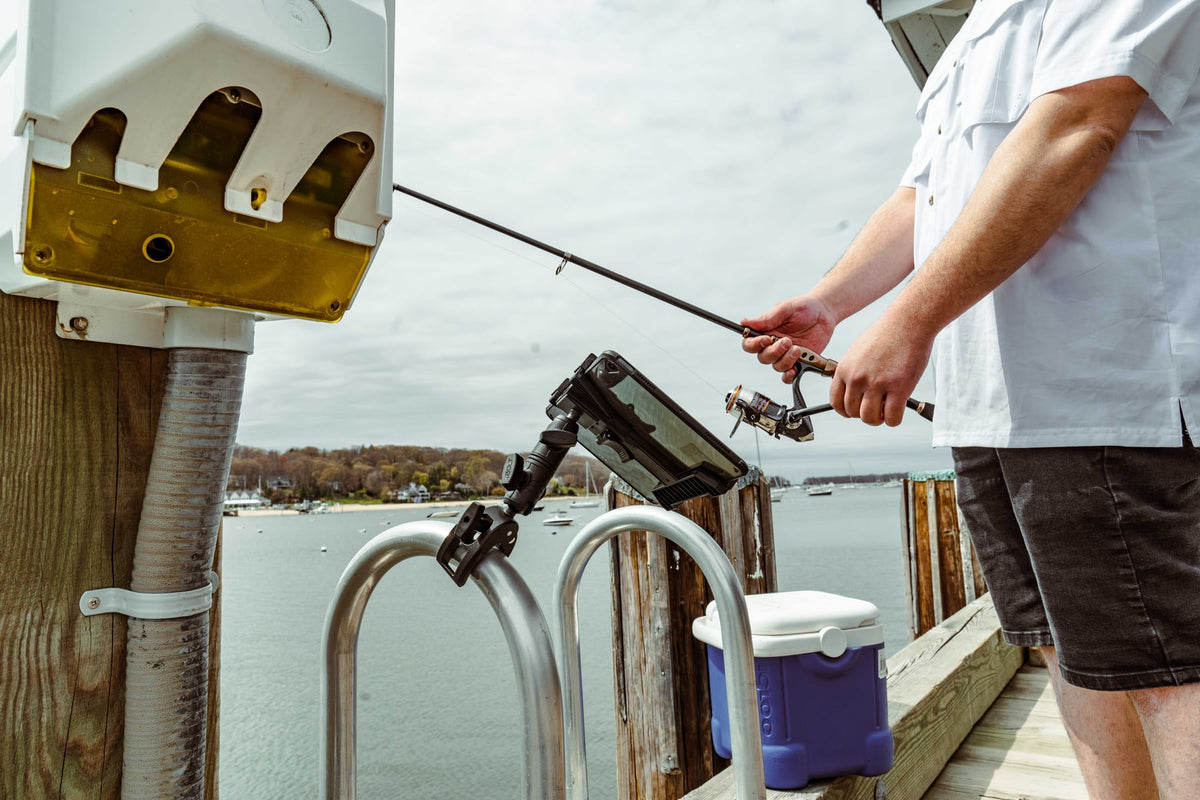
Pontoon Fish Finder Rail Mount Compatibility: How to Match Your Mount to Your Boat
You just unboxed a brand new fish finder. The screen is pristine, the sonar specs are impressive, and you're already picturing the crappie spots it's going to reveal. Then you step onto your pontoon, look at the railing, and reality sets in. The mount that came in the box? It's not going to work. The clamp is too small, the angle is wrong, and there's no way it's staying put once you're cruising across the lake at speed.

You're not alone. Pontoon fish finder rail mount compatibility is one of the most overlooked details in the buying process. Pontoons use a surprisingly wide range of rail diameters, profiles, and materials. Some rails are round, some are square, and thicknesses can vary from 3/4 inch to well over 1.5 inches depending on the manufacturer and model year. Generic mounts built for bass boats or center consoles rarely account for this variety, leaving you with a wobbly screen, scratched rails, or both.
This guide walks you through every variable you need to consider so you get a secure, vibration-free install the first time.
Know Your Rail: Measuring Pontoon Rail Diameter
Before you grab any mount off the shelf, there's one measurement that determines whether your setup works or becomes a frustrating return: your pontoon rail diameter.
Most pontoon boats use round rails in three common sizes: 0.875 inch, 1 inch, or 1.25 inch. To measure yours accurately, wrap a flexible tailor's tape around the rail to get the circumference, then divide by 3.14 to calculate the diameter. A set of digital calipers works even better if you have them handy. Measure in a couple of spots, too, since some rails taper slightly near joints or bends.
It's worth noting that some pontoons, particularly older or heavy-duty models, use rails as small as 3/4 inch or as large as 1.5 inches. That full range exists across the market. iBOLT's IncrediBOLT clamp systems are designed to fit the 0.875 to 1.25 inch range, which covers the vast majority of pontoon boats on the water today. You'll find this range on mounts like the Universal Marine Fish Finder IncrediBOLT Clamp Mount and the Garmin Striker 4 Fish Finder IncrediBOLT 360 Clamp Mount. If your rails fall outside that range, a drill base mount (more on that below) is likely your best path.
One more thing to watch for: not every pontoon uses round tubing. Some manufacturers use square or oval rail profiles. Standard clamp mounts need a round surface to grip evenly, so if your boat has non-round rails, a flat clamp style or drill base mount is the way to go.
Pontoon Fish Finder Rail Mount Compatibility: Choosing the Right Mount Features
Once you've confirmed your rail measurements, the next step is evaluating the mount itself. Finding the right fish finder mount for pontoon boat rails comes down to a handful of features that separate a reliable setup from one that rattles loose before you clear the no-wake zone.
First, look at clamp jaw range. Your clamp needs adjustable jaws that cover the 0.875 to 1.25 inch span common to most pontoons. Second, pay attention to jaw pad material. Rubber or composite pads grip the rail tightly while protecting the powder coat or anodized finish underneath. Third, you want a ball-and-socket joint for angle adjustment, because the angle of your rail almost never matches the angle you need for your screen. Finally, the materials themselves matter. Aluminum and powder-coated steel resist the corrosion that salt spray and freshwater humidity throw at your gear season after season.
iBOLT's mounting systems were originally engineered for demanding commercial and industrial environments: forklifts, fleet vehicles, warehouse equipment. That same heavy-gauge construction and industrial-grade material quality is what makes them hold up so well in marine conditions, where vibration, moisture, and UV exposure are constant. The Universal Marine Fish Finder IncrediBOLT Clamp Mount features heavy-duty adjustable jaws with composite pads and a full ball-and-socket joint. For Garmin Striker 4 owners, the Garmin Striker 4 Fish Finder Handlebar/Rail Mount uses an AMPS plate pattern matched directly to the Striker's mounting holes, and the Garmin Striker 4 Dual Arm Handlebar/Rail Mount extends the screen further from the rail for better viewing angles at the helm.
When comparing single-arm vs. dual-arm configurations, think about screen size and weight. A single-arm mount keeps things tight to the rail and is ideal for compact units under five inches. Dual-arm mounts provide a longer extension and greater adjustability, making them the better pick for larger fish finders that need to sit closer to your line of sight.
Screen Size, Ball Size, and Drill Base vs. Clamp
Screen size is one of the biggest factors in choosing the right mount. It all comes down to matching your unit's weight to the correct ball size.
For smaller units with 4 to 5 inch screens, a 25mm / 1 inch ball system provides plenty of support. Once you step up to 7 to 9 inch screens, the extra weight and wind resistance demand a 38mm / 1.5 inch (C size) ball system. The larger ball joint handles vibration and chop far better at speed. iBOLT's 38mm Universal Marine Fish Finder Mounting Plate and 25mm version both use the industry-standard AMPS hole pattern that most fish finders share. If your unit has a non-standard bracket, the iBOLT Universal Marine Electronics Mounting Plate bridges the gap with multiple hole patterns on a single powder-coated steel plate.
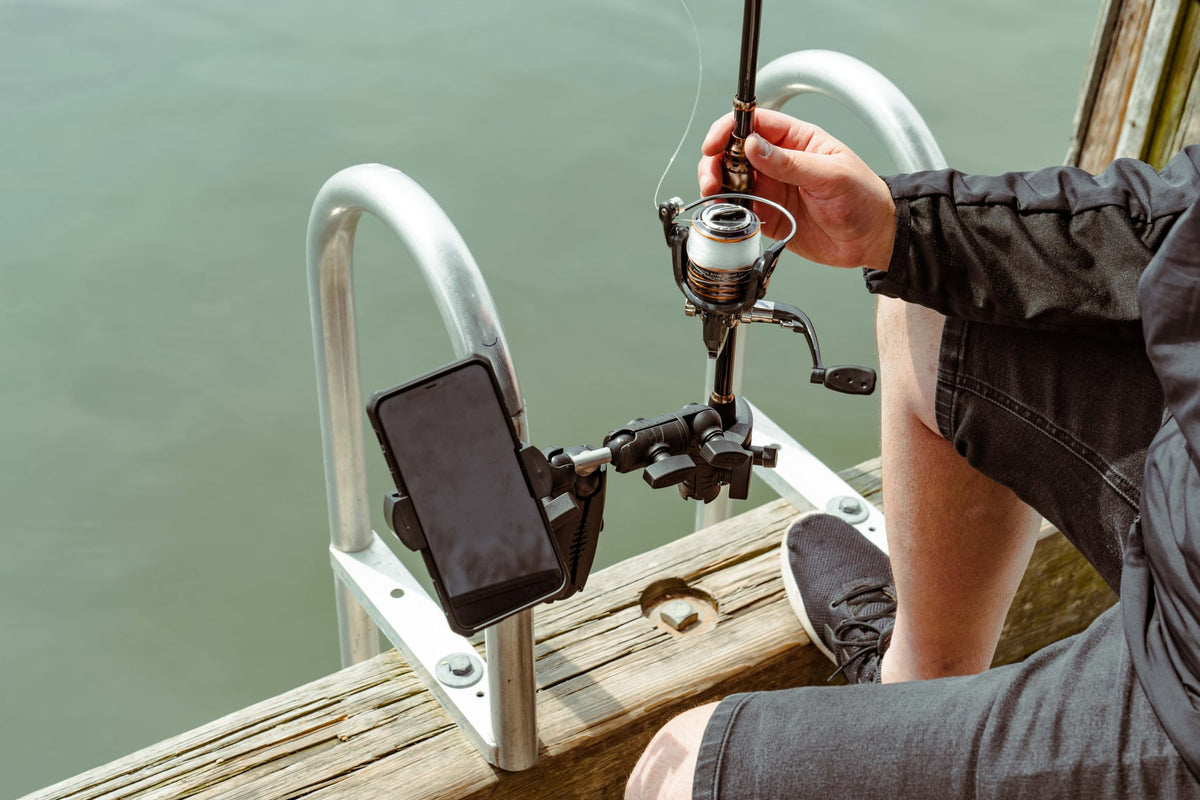
You'll also need to decide how you want to attach to the boat. Clamp mounts require zero drilling and zero permanent modifications. They grip directly onto round rails and can be removed or repositioned in seconds, which is ideal if you also use your pontoon for entertaining or cruising.
Drill base mounts offer a permanent, ultra-stable platform for anglers who always fish from the same spot. The iBOLT 25mm Fish Finder Drill Base Mount and the iBOLT 38mm Fish Finder Drill Base Mount bolt directly to a flat surface, eliminating any possibility of shifting. They're also the right call if your rails fall outside the standard clamp range or use a non-round profile.
Both options come in 25mm and 38mm ball sizes, and every piece is cross-compatible with industry-standard mounting arms. That means whichever path you choose today, you can expand your setup tomorrow without starting from scratch.
Your Pontoon Mounting Checklist
Before you hit the water, run through these key decisions:
- Measure your rail diameter. Most pontoon rails fall between 0.875 and 1.25 inches. iBOLT clamp mounts cover this range. Rails outside that range call for a drill base.
- Check your fish finder's screen size. Units under 5 inches pair well with 25mm (B size) ball systems. Larger screens need 38mm (C size) for stability.
- Pick your base type. Clamp mounts keep things non-permanent and portable. Drill bases offer a rock-solid, permanent hold.
- Plan your cable routing before you commit to a mounting location. Run cables along the inside of the rail with UV-rated zip ties and keep power wires separate from trolling motor lines to avoid sonar interference.
- Confirm AMPS compatibility on your fish finder's bracket.
The beauty of iBOLT's modular system, with its 300+ interchangeable parts, is that your setup can grow with you. Every component uses industry-standard ball sizes (25mm and 38mm), so you can unbolt the fish finder plate and swap in a phone holder or tablet cradle on the same clamp. One rail clamp, multiple accessories, zero extra holes in your boat. If you're not sure which components fit together, iBOLT's Mount Configurator tool can help you build a custom setup matched to your specific needs.


Frequently Asked Questions
Q: What size rail do most pontoon boats have?
A: Most pontoon boats use round aluminum rails in the 0.875 inch, 1 inch, or 1.25 inch diameter range. You can measure yours with a flexible tape (measure circumference and divide by 3.14) or digital calipers. iBOLT's IncrediBOLT clamp mounts cover this full range without needing adapters.
Q: What is the difference between 25mm and 38mm ball mounts for fish finders?
A: The 25mm (B size) ball is designed for lighter, smaller electronics like 4 to 5 inch fish finders. The 38mm (C size) ball handles the extra weight and wind resistance of 7 to 9 inch screens and keeps them stable at speed. Choosing the right ball size prevents screen wobble and vibration on the water.
Q: Can I mount a fish finder on my pontoon without drilling holes?
A: Yes. Clamp-style mounts like the iBOLT IncrediBOLT line grip directly onto round pontoon rails and require no drilling or permanent modifications. They can be repositioned or removed in seconds, which is ideal if you also use your pontoon for entertaining or cruising.
Q: Are iBOLT fish finder mounts compatible with RAM mount arms?
A: Yes. iBOLT components use industry-standard ball sizes (25mm and 38mm) that are cross-compatible with RAM and other standard mounting arms. This means you can mix and match components or integrate iBOLT parts into an existing setup.
Getting your pontoon fish finder setup right the first time doesn't have to be complicated. Measure your rail, match your screen size to the right ball system, decide between a clamp or drill base, and plan your cable routing. With those four steps covered, you're ready for a clean, stable install that holds up all season.
Explore iBOLT's full lineup of marine fish finder mounts to find the right fit for your boat.

Leave a comment
This site is protected by hCaptcha and the hCaptcha Privacy Policy and Terms of Service apply.