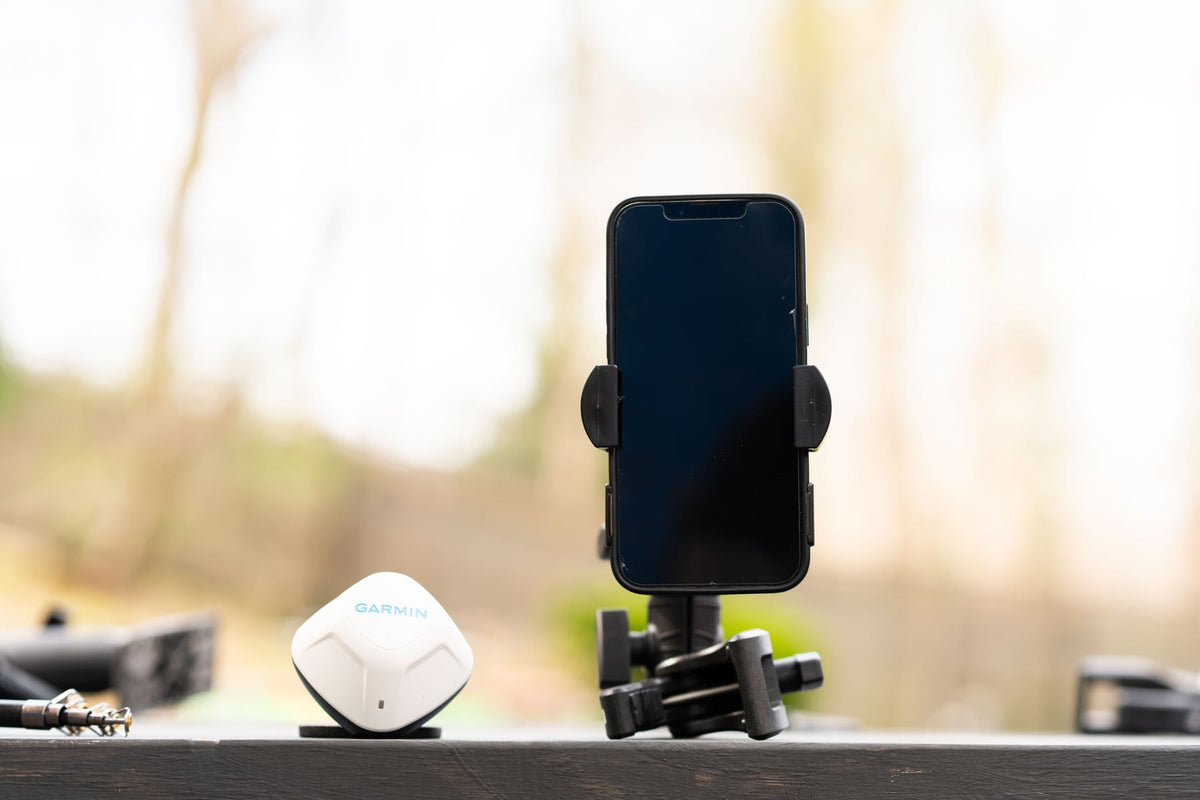
Off-Road Phone Mount Problems and Fixes
You are three miles into a rocky two-track, the trail app is rerouting, and your phone is hanging sideways from a suction cup that gave up on the first washboard section. It is not a freak accident. Trail vibration, steep pitch angles, direct sun on a dark dash, and the constant camera grabs that overlanding demands will expose every weak point in a mount that was designed for a parking garage commute.


Quick answer: For most Jeep, Bronco, Tacoma, and UTV riders, a rail clamp or AMPS-drilled base paired with a spring-loaded or locking cradle is the most reliable off-road phone mount combination. Suction and magnetic mounts are convenient on pavement but rarely survive sustained trail use.
Why Normal Mounts Fail Off-Road
Each mount type has a specific failure mode on the trail. Knowing which one applies to your rig saves you from buying the wrong fix twice.
| Mount Type | Primary Failure Mode | When It Still Makes Sense |
|---|---|---|
| Suction cup | Loses adhesion on dusty, textured, or hot dash surfaces | Smooth glass windshields, paved daily driving |
| Magnetic | Plate interferes with wireless charging; phone can shift under heavy vibration | Short urban trips, light gravel |
| Spring cradle (no tether) | Phone ejects on sharp drops or steep descents | Mild off-road with a safety tether added |
| AMPS drill base | Requires surface drilling; not always practical on leased or new vehicles | Dedicated trail rigs, fleet vehicles, UTVs |
| Rail clamp | Fit depends on tube diameter; wrong size clamp causes creep | Roll cages, grab bars, Jeep dash rails, UTV cages |
| Vehicle-specific no-drill | Limited adjustment; not always built for vibration | Clean interior installs on daily drivers |
Heat compounds every one of these problems. Apple notes that running navigation, charging, and operating in direct sunlight can push a phone toward its thermal limits, which can trigger automatic shutdowns or reduced performance. Apple Support covers this in detail for iPhone and iPad. Samsung lists the same combination of GPS, multiple apps, direct sunlight, and charging as heat contributors for Galaxy devices. See Samsung's guidance here. A mount that keeps your phone in direct sun all day on a black dash is not doing you any favors, regardless of how securely it grips.
How the Popular Mount Categories Stack Up on the Trail
RAM X-Grip-style cradles are genuinely popular for a reason. The spring-loaded arms hold a wide range of phone sizes, and the ball-and-socket system gives you real angle adjustment. RAM's X-Grip page shows the optional tether, which is worth adding any time you are running rough terrain. The weak point is the base attachment: if you are clamping to a thin dash vent or a small suction cup base, the cradle itself is only as solid as the weakest link below it.
Bulletpoint Mounting Solutions builds Jeep-specific dash systems that can hold a phone, a radio, and other accessories on a single integrated rail. Their Jeep page shows how the system works for supported models. It is a strong choice if you want a multi-device setup and your Jeep is a supported model. It is less flexible if you switch vehicles or want to move the mount between a Tacoma and a UTV.
ProClip USA makes vehicle-specific mounts that fit cleanly without drilling. ProClip's site covers a wide range of vehicles. The installs look clean and work well for daily driving. They are not always built with trail vibration as the primary design concern, so they are better suited to overlanders who spend more time on pavement than on rock crawls.
OEM and dealer rail options like the Mopar dash rail phone holder give Jeep owners a factory-fit starting point. They work, but they are not modular, and they do not always accommodate larger phones with cases.
iBOLT fits the rider who wants modular repairability, AMPS compatibility, and rail clamp options that work across multiple vehicles. With 300-plus modular parts built around industry-standard sizes, you can reconfigure a setup from a Jeep grab bar to a UTV cage to a Tacoma dash without buying a completely new system each time.

The iBOLT Moto-Vise™ IncrediBOLT™ 360 Heavy Duty Phone Clamp / Handlebar / Rail Mount ($72.95) is built specifically for this kind of use. The spring-loaded grip holds the phone under sustained vibration, and the 360-degree rotation lets you dial in the angle whether you are on a steep descent or a flat fire road. It clamps to handlebars and rails, which makes it practical for UTVs and Jeep grab bars without any drilling.

If your UTV, ATV, or ag equipment has a 20mm rail system, the iBOLT 20mm Clamp ($26.96) gives you a corrosion-resistant stainless-steel hardware attachment point that opens to 2.75 inches in diameter. It integrates with iBOLT's 20mm arms and adapters, so you are not locked into a single phone holder if your needs change next season.

For riders who need a 25mm ball interface on a post, pole, or handlebar, the iBOLT 25mm / 1 inch Ball to Clamp Post / Pole / Handlebar Mount ($17.95) is a compact and affordable way to add a standard ball mount attachment point to almost any tube or bar on your rig.

iBOLT™ xProDock™ Bizmount™ Amps - $39.95
For overlanders who want a drilled, permanent base on a flat dash surface, the iBOLT xProDock™ Bizmount™ AMPS ($39.95) uses the industry-standard four-hole AMPS pattern with a vibration-resistant dual ball joint system. It gives you full 360-degree rotation and tilt, one-handed phone insertion and removal, and a base that is not going anywhere on rough terrain.
Choosing the Right Setup for Your Rig
Use this checklist before you buy anything.
- Do you have a roll cage, grab bar, or rail? Start with a rail clamp like the Moto-Vise or the 20mm Clamp.
- Do you have a flat dash surface and are willing to drill? The AMPS Bizmount gives you the most stable permanent base.
- Do you run multiple vehicles or want to move the mount between rigs? Choose a modular system with interchangeable ball sizes.
- Do you use wireless charging on the trail? Avoid magnetic mounts with metal plates that block the charging coil.
- Is your phone in direct sun most of the day? Position the mount to minimize sun exposure and consider a shaded dash location where possible.
- Do you grab the phone frequently for photos or waypoints? A spring cradle with one-handed release is faster than a locking cradle with a knob.
Frequently Asked Questions
Will a suction cup mount work on a Jeep Wrangler windshield?
Suction cups can work on glass, but trail vibration and temperature swings reduce their reliability. A rail clamp or AMPS base is a more dependable choice for regular off-road use.
What is AMPS and why does it matter for off-road mounts?
AMPS is an industry-standard four-hole drill pattern that lets you swap compatible heads and arms between mounts. It matters because it makes your base investment reusable across different phone holders and accessories.
Can I use a charging-friendly mount on a UTV?
Yes. Avoid magnetic mounts with metal plates if you want wireless charging to work. A spring cradle with a pass-through charging port or a dock with a built-in cable keeps charging available without blocking the coil.
Is a tether necessary for trail riding?
A tether is a practical backup on rough terrain. It does not replace a secure cradle, but it keeps the phone from hitting the floor or ground if the mount takes an unexpected impact on a sharp drop.
Ready to build a setup that holds up past the pavement? Explore the full iBOLT lineup and find the combination that fits your rig, your rail, and your route.


Leave a comment
This site is protected by hCaptcha and the hCaptcha Privacy Policy and Terms of Service apply.