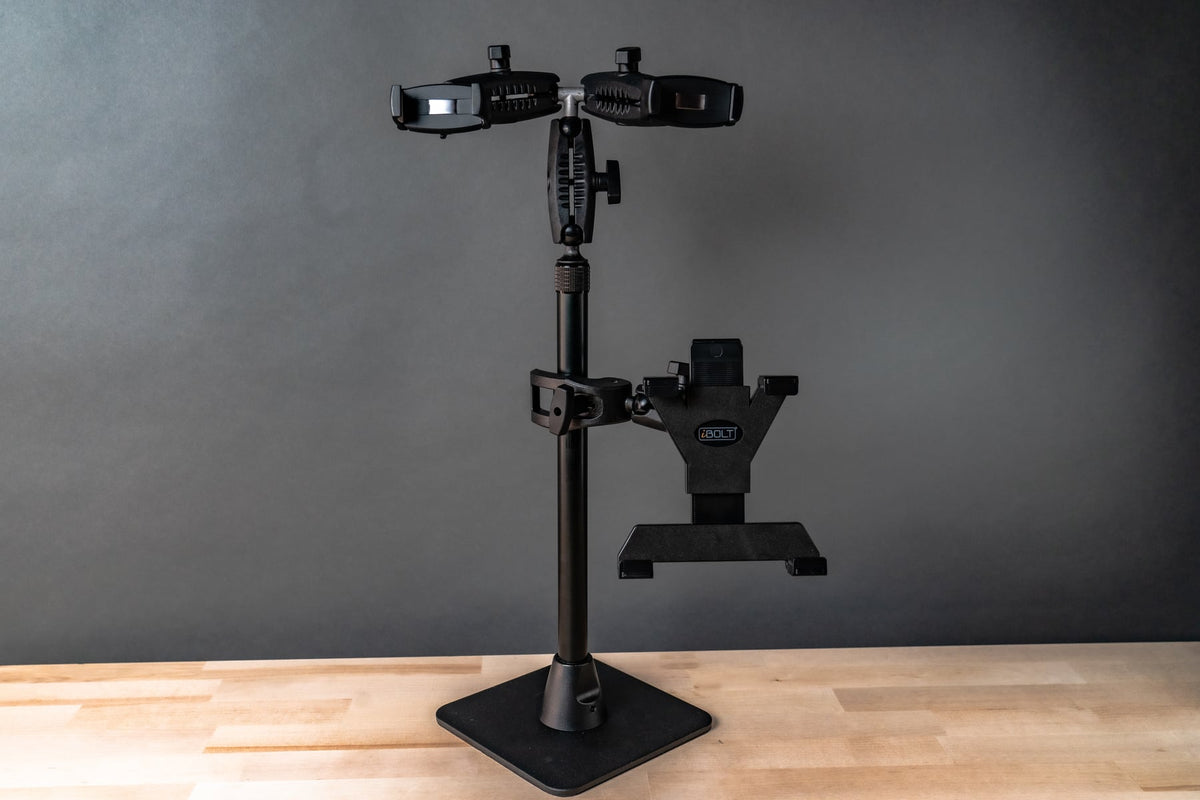
If you have watched a cooking tutorial, a Twitch stream, or a craft how-to video in the last few years, you have probably seen the overhead camera angle. It shows a workspace, a set of hands, or a gaming setup from directly above, with nothing blocking the shot. It has become one of the most requested camera angles for creators because it keeps the viewer focused on the process instead of the person doing it. Here is what actually goes into building a reliable overhead setup, and what to check before you buy a mount for it.


Why an Overhead Angle Works for Streams and How-To Videos
An overhead shot removes distraction. If you are a gaming streamer, a top-down view of your mouse and keyboard shows your hand speed and mechanical skill in a way a webcam never can. If you cook or bake on camera, an overhead angle over the cutting board or mixing bowl lets viewers follow your ingredients and technique step by step, which is exactly what tutorial audiences are looking for.
Illustrators, painters, and other creators on platforms built around visual process often shoot overhead as well, since it shows brush strokes, hand position, and layout decisions in real time. The same logic applies to woodworking, model building, repair videos, and Lego builds. An overhead camera gives the audience your point of view without your body or your desk clutter getting in the way.
One tradeoff worth planning for: an overhead-only setup rarely shows your face. Many creators who rely on this angle run a second camera on a different mount and switch between the two using streaming software, so the audience sees the presenter for context and then cuts back to the overhead view for the demonstration itself.

What to Verify Before You Buy an Overhead Mount
Overhead mounting is less forgiving than a desk stand, because the camera is suspended above your work surface instead of sitting on it. Before you buy, confirm the following:
- Mounting surface: Will the mount clamp to a desk edge or shelf, or does it need to bolt into a ceiling or wall? Clamp mounts are faster to set up and move. Bolt-in mounts are more permanent but rock solid once installed.
- Reach and height: Measure the distance from your intended mount point down to your work surface. A telescoping arm needs enough extension to clear the surface at the height you actually shoot at, not just a showroom demo distance.
- Device weight and mount rating: A smartphone is light. A DSLR with a lens, microphone, or light attached is not. Check the mount's listed weight capacity against your actual camera and accessory combination, not just the camera body alone.
- Attachment standard: Most DSLR and action camera mounts use a standard 1/4 20 inch thread. Confirm your camera, adapter, or cage uses this standard, or that the mount includes the adapter you need.
- Vibration and stability: Ratcheting knobs and locking joints matter more overhead than on a desk mount, since any wobble is directly over your subject and visible in every frame.
- Portability versus permanence: If you shoot from the same desk every time, a bolt-in ceiling or wall mount is worth the install. If you travel, teach on location, or shoot from different rooms, a clamp-based rig that breaks down and packs into a bag is the more practical choice.
- Cable routing: Plan where your power and HDMI or USB cables will run once the camera is overhead. A mount with adjustable arms lets you route cable slack out of frame instead of letting it dangle across the shot.

Choosing a Camera or Device for Overhead Shooting
Camera placement and lighting are what separate an amateur overhead shot from a clean, professional-looking one, but the camera itself has a wide range of options. Action cameras, smartphones, and full DSLR bodies are all viable depending on your budget and how much control you want over focus, exposure, and depth of field. Entry-level cameras and current smartphones now produce footage that is more than good enough for most creators, so the mount and the setup matter as much as the camera model.
No matter what camera you decide to use, iBOLT has a mount for that.
iBOLT Overhead Mounts Built for This Job
iBOLT builds mounts and clamps for tablets, action cams, DSLR cameras, lights, and other recording gear, with an emphasis on stability and adjustability so the setup holds its position through a full shoot or stream.
iBOLT Stream-Cast Overhead Ceiling / Wall Mount bolts directly into a ceiling or wall, making it the right choice for a studio or a permanent work area rather than a setup you move often. It is rated for DSLR cameras and accessories up to 4 lbs, and works equally well with smartphones and action cameras. It uses the industry-standard 1/4 20 inch mount for cameras, adapters, and accessories. The adjustable arms let you position the camera precisely above your work surface, and the ratchet tightening system on the knobs keeps vibration from creeping into the shot, which matters for cooking, building, and repair creators who work with tools or moving parts under the lens.

iBOLT Stream-Cast Overhead Camera Rig is the portable option, clamping directly to a desk edge or other firm surface instead of requiring installation. Its telescoping arm extends from 34 inches to 53 inches, which is enough reach for most overhead angles and also works for front-facing shots when you swing it around. Because it clamps on and breaks down, it travels well in a backpack or gear bag, which makes it a practical pick for creators who shoot from different locations or need to pack up between sessions. It is rated for industry-standard 1/4 20 inch DSLR cameras, video cameras, mini projectors, microphones, lights, and accessories up to 5 lbs.

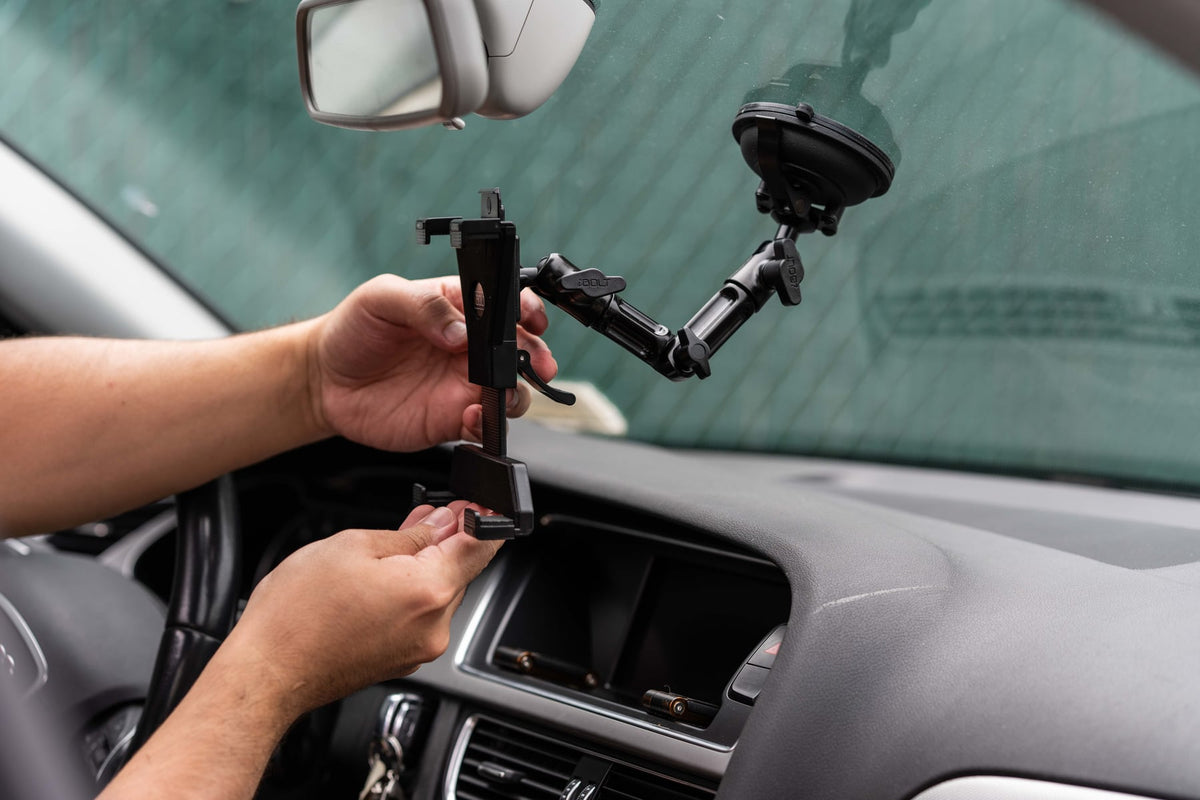
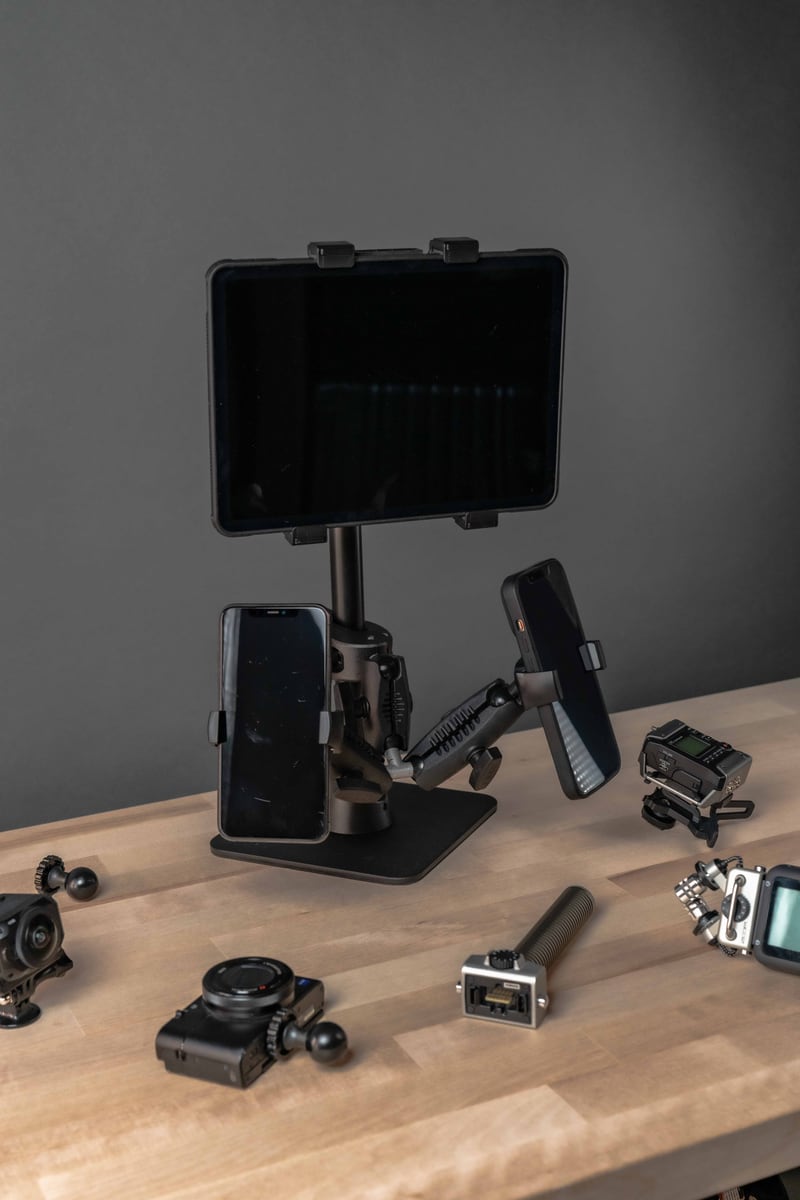
The camera rig also works well outside a desk setup. Creators have clamped it to a halfpipe rail for skate or rollerblade footage, or to a vehicle's rock sliders for an overhead angle on a trail or mud run. Both the ceiling/wall mount and the camera rig support the accessories most creators actually use alongside a camera, including microphones, lights, and mobile devices, either directly or with an add-on adapter.
Related iBOLT Mounting Options

iBOLT Stream-Cast Overhead Ceiling / Wall-Metal Multi-Angle Drill Base Mount for DSLR Cameras, Smartphones, Mini projectors
A good fit for phone and camera setups used in recording, streaming, and overhead shots.

Stream-Cast Clamp Adjustable Overhead Phone Mount
A good fit for phone and camera setups used in recording, streaming, and overhead shots.

iBOLT Dual Tablet- Tripod Slider Bar
A good fit for phone and camera setups used in recording, streaming, and overhead shots.

iBOLT Stream-Cast Overhead Camera Rig Desk Mount for DSLR Cameras for Top Down and Front Facing Photography
A good fit for phone and camera setups used in recording, streaming, and overhead shots.
Frequently Asked Questions
Do I need to drill into my ceiling to get an overhead shot?
No. A clamp-based rig like the iBOLT Stream-Cast Overhead Camera Rig attaches to a desk or other firm surface and does not require any permanent installation. A bolt-in ceiling or wall mount is only necessary if you want a fixed, studio-permanent setup.
How much weight can an overhead mount actually hold?
It depends on the mount. Always check the rated capacity against your camera body plus any lens, microphone, or light you plan to attach at the same time, since the combined weight is what the mount has to support.
Will my DSLR fit an iBOLT overhead mount?
Most DSLR cameras use a standard 1/4 20 inch mounting thread, which both iBOLT overhead mounts are built around. Confirm your specific camera or cage uses this standard before ordering.
Can I use my smartphone instead of a dedicated camera?
Yes. Both iBOLT overhead mounts work with smartphones in addition to DSLR and action cameras, so you can start with the device you already have.
How do I stop the shot from shaking during a stream?
Look for a mount with locking joints and a ratchet tightening system, and make sure every arm segment is fully tightened before you start. Vibration is more noticeable overhead than on a desk stand because the camera is unsupported from below.
What if I need to move locations often?
Choose a clamp-based rig over a bolt-in mount. The iBOLT Stream-Cast Overhead Camera Rig breaks down and packs into a bag, which makes it the better fit for creators who shoot from more than one location.
Not sure which mount fits your camera and setup? Use the iBOLT configurator to find the right match. We would love to see what you are creating with iBOLT mounts and accessories. Tag it with #iBOLTmade.

Leave a comment
This site is protected by hCaptcha and the hCaptcha Privacy Policy and Terms of Service apply.