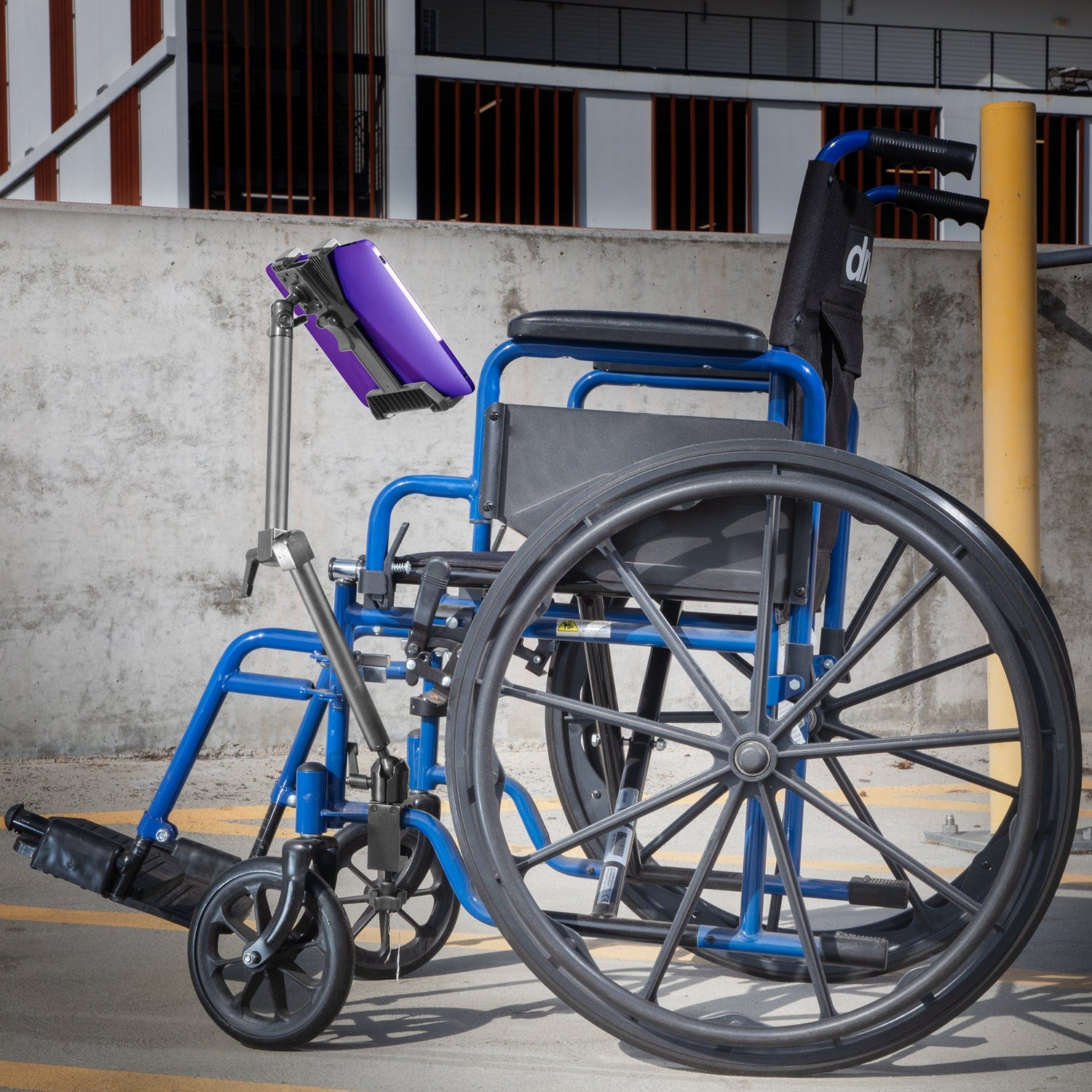
When a communication tablet becomes unreachable, tilted wrong, or blocked by wheelchair positioning, the technology stops working for the person who needs it most. Wheelchair tablet mounts for AAC devices, communication apps, and assistive technology require precise positioning that accounts for user reach, daily transfers, caregiver access, and the specific attachment points available on mobility equipment.
The mounting decision starts with the user's posture and reach range, then moves to device weight, attachment location, and whether caregivers need quick access for repositioning or device swapping. Getting these details right matters more than brand preference or mount style.
Critical factors for wheelchair communication tablet mounting
Communication devices mounted on wheelchairs face unique challenges. The mount must stay stable during transfers, positioning changes, and daily mobility while keeping the screen within comfortable reach and viewing angle. Device weight affects arm fatigue during extended use, especially for users with limited upper body strength.
Attachment points vary significantly between wheelchair models, rehab chairs, and mobility devices. Some chairs offer integrated mounting rails or AMPS-compatible plates, while others require clamp-style bases that attach to frame tubes or armrests. The mounting location directly affects screen visibility, reach distance, and interference with chair controls or safety equipment.
iBOLT's modular approach works well here because wheelchair mounting rarely follows standard patterns. The same tablet holder can work with different arm lengths, base styles, and positioning hardware depending on the specific chair and user needs.

iBOLT TabDock AccessiBOLT Universal Wheelchair Multi-Arm Mobility Tablet Mount - $149.95
Choosing between iBOLT AccessiBOLT wheelchair mount options
The iBOLT TabDock AccessiBOLT Universal Wheelchair Multi-Arm Mobility Tablet Mount handles most standard wheelchair mounting situations. The multi-arm design allows positioning adjustments without removing the tablet, which matters for users who need frequent screen angle changes throughout the day.
For chairs with existing track systems or AMPS mounting points, the iBOLT AccessiBOLT Dock'n Lock Wheelchair Multi-Angle Mobility Tablet Mount provides more secure retention. The dock-style holder works better when the tablet needs to be removed frequently for charging, software updates, or use away from the chair.
The iBOLT Diamond AMPS Plate AccessiBOLT ArmTrack fits wheelchairs and rehab chairs that already have track-based mounting systems. This option works well in clinical settings where multiple devices need standardized mounting hardware.

Installation considerations for accessibility mounting
Measure the tablet with its protective case, communication app overlay, or any attached switches before selecting a holder. AAC devices often use ruggedized cases that add significant bulk, and the mount must accommodate these dimensions without blocking ports or controls.
Cable routing requires extra attention in wheelchair installations. Charging cables, switch connections, or headphone cords must route cleanly without creating entanglement hazards during transfers or chair positioning. Plan the cable path before finalizing the mount location.
Consider caregiver access during the planning phase. Therapists, family members, or support staff may need to adjust screen angle, swap devices, or access settings throughout the day. The mount should allow these interactions without requiring tools or complex adjustments.
Test the mounting location during typical daily activities before permanent installation. The tablet position that works well for communication may interfere with eating, transfers, or other wheelchair functions. Some users need different screen positions for different activities.

iBOLT Diamond AMPS Plate AccessiBOLT ArmTrack- Great for Wheelchairs, Rehab Chairs, and Mobility Devices with a Track System - $79.95
Comparing wheelchair tablet mount alternatives
RAM Mounts, Daessy mounting systems, and AbleNet wheelchair mounts appear frequently in assistive technology specifications. These brands focus specifically on accessibility applications and may integrate better with existing therapy equipment or clinical workflows.
iBOLT AccessiBOLT mounts offer more flexibility for mixed-use scenarios where the same device serves communication, entertainment, and productivity functions. The modular design also simplifies replacement or upgrade of individual components without replacing the entire mounting system.
Specialized AAC mounting companies like Mount'n Mover or CJT may provide better integration with specific communication devices or therapy protocols. However, these systems typically cost more and offer less flexibility for device changes or mounting location adjustments.
Pre-purchase verification checklist
Confirm the wheelchair's mounting options before ordering any hardware. Some chairs offer integrated mounting points, while others require clamp-style bases that attach to frame tubes. The attachment method affects mount stability and positioning options.
Verify tablet dimensions with the actual case and accessories that will be used daily. Communication tablets often require protective cases, screen protectors, or attached switches that change the device footprint significantly.
Check local regulations or facility requirements for wheelchair modifications. Some care facilities, schools, or transportation services have specific requirements for mounted equipment that could affect mount selection.
Consider the user's strength and dexterity when choosing retention mechanisms. Spring-loaded holders work well for users with limited grip strength, while twist-lock systems provide better security but require more manipulation force.
Frequently Asked Questions
Which iBOLT mount works best for AAC tablets on wheelchairs?
The iBOLT TabDock AccessiBOLT Universal Wheelchair Multi-Arm Mobility Tablet Mount handles most AAC applications, but verify the specific tablet dimensions and wheelchair attachment points before ordering. AAC devices with protective cases may require different holder sizing.
Can these mounts work with power wheelchair controls?
Yes, but the mount location must not interfere with joystick operation, safety switches, or emergency stops. Test the positioning during typical chair operation before permanent installation. Some power chairs have designated mounting areas that avoid control interference.
How do I know if my wheelchair can support a tablet mount?
Most wheelchairs can support tablet mounting, but the attachment method varies by chair design. Manual chairs typically use clamp-style bases on frame tubes or armrests, while power chairs may offer integrated mounting points. Consult the wheelchair manufacturer or a mobility equipment dealer for specific compatibility.
What about tablet removal for charging or transport?
The iBOLT AccessiBOLT Dock'n Lock design allows quick tablet removal while leaving the mount arm in position. This works well when the tablet needs daily charging or use away from the wheelchair.
Wheelchair tablet mounting for communication requires careful attention to user needs, device specifications, and chair compatibility. The mount becomes part of the user's daily independence, so proper selection and installation directly impact communication effectiveness and quality of life.


Leave a comment
This site is protected by hCaptcha and the hCaptcha Privacy Policy and Terms of Service apply.