Clip-On Phone Mount: Match Your Clamp, Ball, and Surface
Problem proposition: Buyers searching for a phone holder with clip often grab the wrong clamp style or ball size for their surface, so this article walks through how to match all three variables for a secure, frustration-free setup.
Featured product links: iBOLT Moto-Vise™ IncrediBOLT™ Heavy Duty Phone Clamp / Handlebar / Rail Mount, iBOLT 17mm Dual Ball Clamping Mount for Handlebars, Poles, Posts for Garmin GPS Systems and iBOLT Phone Holders
A loose phone mount is worse than no mount at all. If your device is wobbling on a handlebar, sliding on a desk clamp, or simply not reaching the angle you need, the problem usually traces back to one of three mismatches: wrong clamp style for the surface, wrong ball size for the arm, or a phone holder that was never designed for the environment you are using it in. This guide cuts through the generic advice and helps you build a clip-on phone setup that actually holds.
What "Clip-On" Actually Means in Mounting Terms
The phrase phone holder with clip covers a wide range of products, and that is part of the confusion. In practical mounting terms, a clip-on or clamp-on phone mount has two distinct jobs: gripping the surface it attaches to, and gripping the phone itself. Those are separate mechanisms, and both need to be right.
The surface clamp can be a screw-tightening jaw, a spring-loaded clip, or a locking rail clamp. The phone holder can be a spring-loaded cradle, a screw-tightened vise, or a case-specific dock. Between those two components sits the arm or ball joint, which determines how much articulation you get and whether your accessories are even compatible with each other.
Understanding this three-part structure, surface clamp, arm or ball joint, and phone holder, is the fastest way to stop buying mounts that almost work.
Ball Size Is the Compatibility Variable Most Buyers Miss
If you are building a modular mounting system, ball size matters more than almost any other spec. The most common sizes you will encounter are 17mm, 25mm (1-inch B-size), and 38mm (1.5-inch C-size).
The 17mm ball is closely associated with Garmin-style GPS devices and lightweight holders. It is a smaller socket, which means it is compact and works well on bicycles and motorcycles where space is tight. The 25mm ball is the most common size for phone and lighter tablet setups. The 38mm ball is reserved for heavier tablets, monitors, and industrial applications where you need a larger socket to handle the torque of a bigger device.
Mixing ball sizes without an adapter means your arm and your holder will not connect, full stop. Always confirm ball size before purchasing any component in a modular system.
Handlebar and Rail Mounting: Where Clamp Fit Is Critical
Handlebar mounting is one of the most searched mounting scenarios, and it is also one of the most punishing environments for a poorly fitted clamp. Vibration, weather, and the physical demands of riding or off-roading will expose every weakness in a loose setup.
For a handlebar mount phone setup that holds under real conditions, you need a clamp that is sized for your bar diameter, tightened properly, and paired with a phone holder that has genuine grip, not just friction. Spring-loaded cradles work well here because they maintain clamping force even when vibration tries to work the device loose.

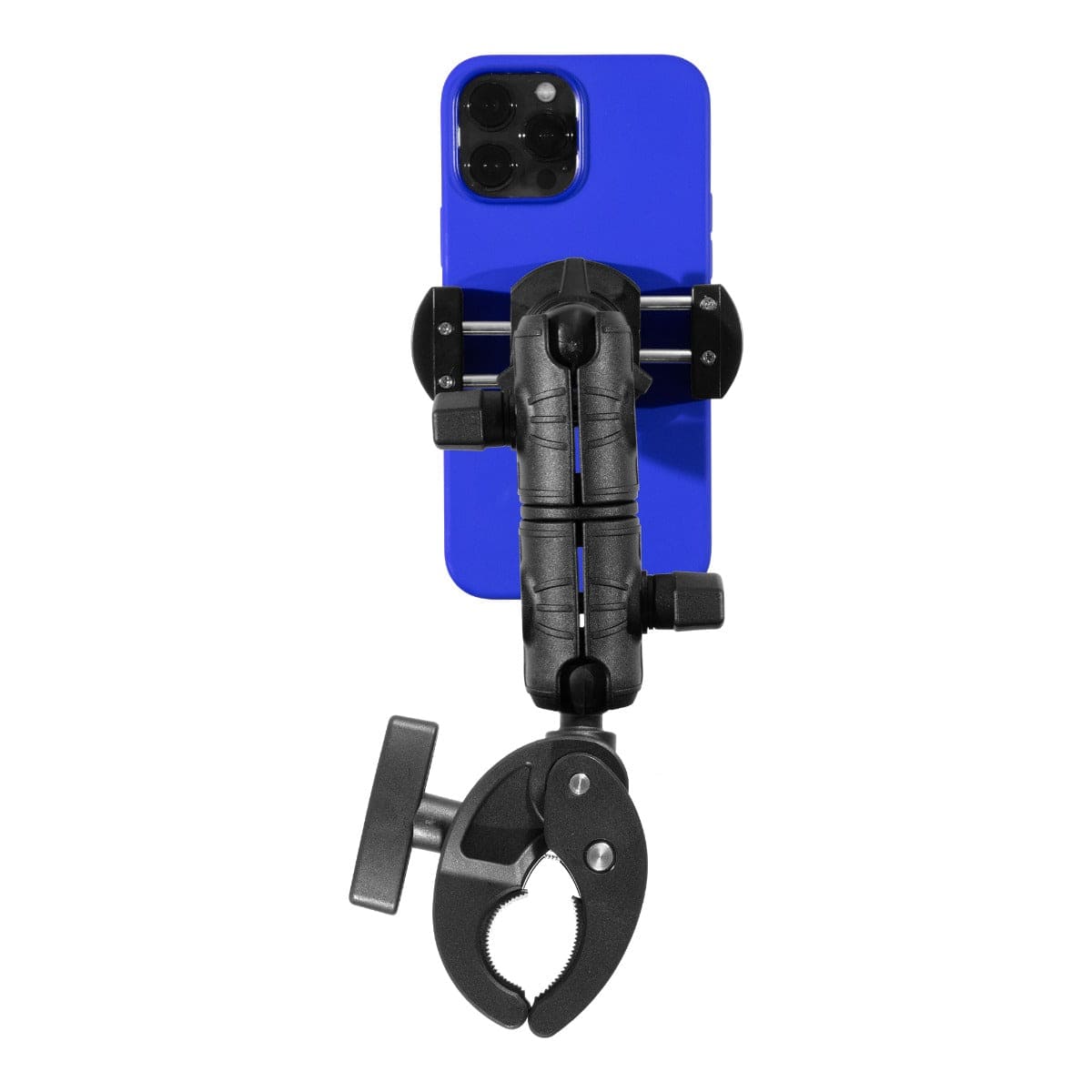
iBOLT Moto-Vise™ IncrediBOLT™ Heavy Duty Phone Clamp / Handlebar / Rail Mount - $64.95
The iBOLT Moto-Vise™ IncrediBOLT™ Heavy Duty Phone Clamp / Handlebar / Rail Mount is built specifically for this kind of environment. The spring-loaded grip keeps the phone secured even in rough conditions, and the mount is designed for handlebars, rails, and poles across activities like kayaking, fishing, and off-roading. At $64.95, it is a purpose-built solution for buyers who need confidence in demanding conditions, not a desk-grade clamp repurposed for outdoor use.
When You Need a Dedicated Clamp for the Surface, Not the Phone
Some setups call for separating the surface clamp from the phone holder entirely. This is common when you are mounting to a pole, post, or handlebar and want to use a specific phone holder or GPS device that connects via a ball socket rather than a direct cradle.
In these cases, a standalone handlebar clamp with a ball output gives you the flexibility to swap devices without replacing the entire mount. You install the clamp once, and then you can connect a Garmin GPS, a phone holder, or any compatible 17mm accessory depending on what you need that day.

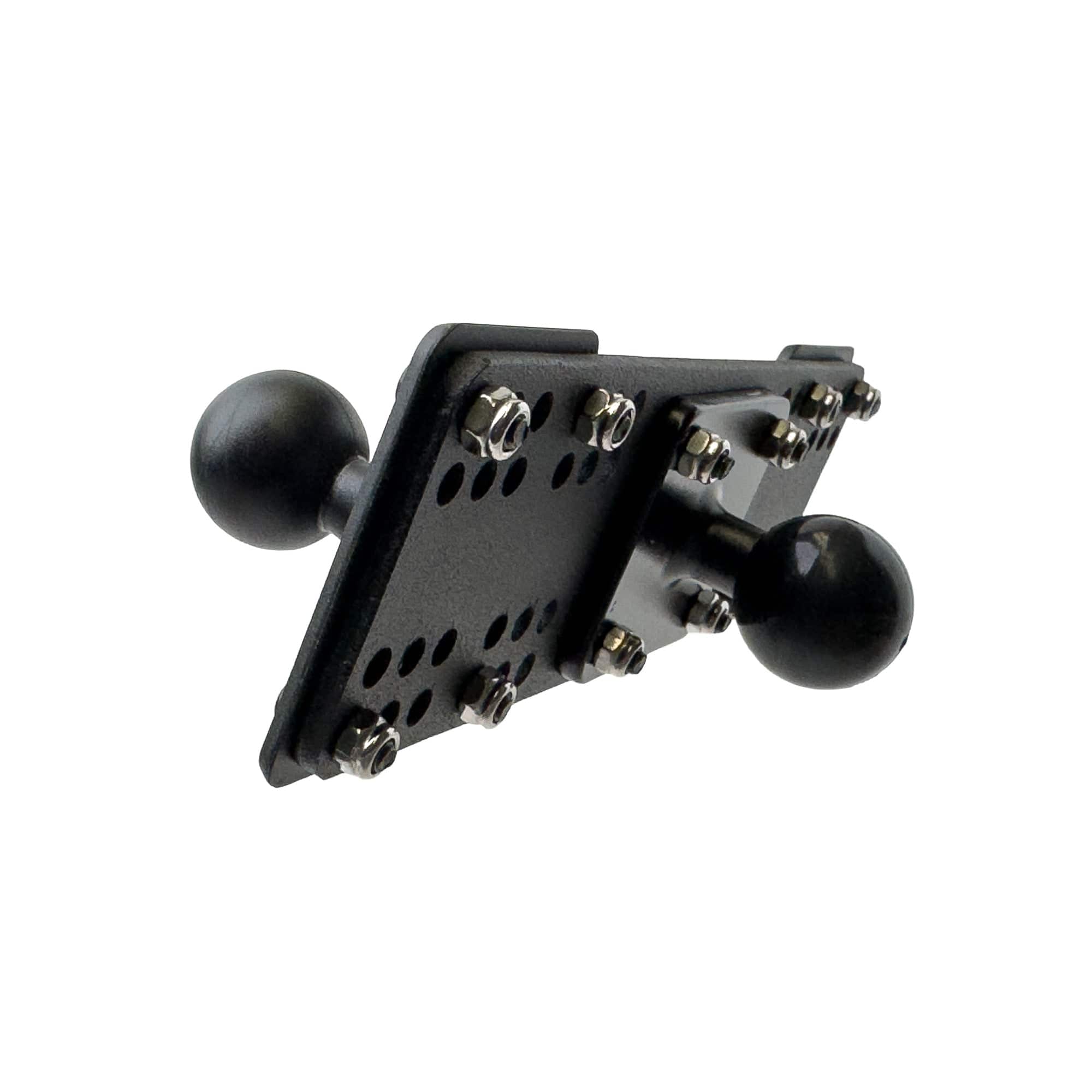
The iBOLT 17mm Dual Ball Clamping Mount for Handlebars, Poles, and Posts is designed for exactly this use case. It clamps to handlebars, poles, or posts and outputs a 17mm dual ball connection, making it compatible with Garmin GPS systems and iBOLT phone holders. At $29.95, it is a practical base component for anyone building a modular setup on a bicycle or motorcycle.
Surface Type Changes Everything About Clamp Selection
A phone clamp that works perfectly on a 22mm bicycle handlebar will not fit a 35mm motorcycle bar. A desk clamp rated for a 50mm edge will not grip a 10mm shelf lip. Before you buy any cell phone holder clip or clamp-style mount, measure the surface it needs to attach to.
Key surface variables to check before purchasing:
-
Diameter or thickness: Handlebars and poles are measured by outer diameter. Desk and shelf clamps are measured by edge thickness. Confirm the clamp's stated range covers your actual measurement.
-
Material: Rubber-padded jaws protect painted or powder-coated surfaces. Bare metal clamps can scratch. Check what the clamp jaw is lined with.
-
Stability of the surface itself: A clamp on a wobbly shelf or a hollow tube will transfer that instability to your phone. The mount is only as solid as what it is attached to.
-
Access clearance: Make sure the clamp body does not block controls, buttons, or other accessories near the mounting point.
Building a Setup That Stays Secure Over Time
Even a well-matched clamp and phone holder will loosen over time if you do not maintain the connection. Vibration, temperature changes, and repeated removal and reinstallation all work against clamping force. A few habits make a real difference.
Check tightness before every ride or shift if you are using the mount in a mobile environment. Inspect rubber padding periodically because worn padding reduces grip. If the mount uses a ball-and-socket joint, confirm the locking mechanism is fully engaged before you rely on it. And if you are using a modular system with multiple components, check every connection point, not just the surface clamp.
A phone clamp that is inspected regularly will outlast one that is set and forgotten.
Frequently Asked Questions
What is the difference between a phone clamp and a clip-on phone mount?
In practice, the terms are often used interchangeably. A phone clamp typically refers to the mechanism that grips the phone itself, while a clip-on mount describes the full assembly including the surface attachment. Some products combine both into a single unit; others separate them into modular components.
Will a 17mm ball mount work with my phone holder?
Only if your phone holder has a 17mm socket. Many iBOLT phone holders use a 17mm or 25mm ball connection. Check the product specs for your specific holder before pairing it with a 17mm clamp base.
Can I use a handlebar clamp on a desk or shelf?
Some clamps are designed for round surfaces only and will not grip a flat edge. Check whether the clamp jaw is shaped for cylindrical or flat surfaces before attempting to use it outside its intended application.
How do I know if my phone will fit the holder?
Check the phone holder's stated width range, including whether it accommodates your case. Spring-loaded cradles typically handle a range of widths, but always verify the maximum width against your phone-plus-case measurement.
Is a more expensive mount worth it for everyday use?
If you are mounting in a demanding environment like a motorcycle, kayak, or work vehicle, a purpose-built mount with a secure clamp mechanism is worth the investment. A mount that fails in motion is a safety issue, not just an inconvenience.

Leave a comment
This site is protected by hCaptcha and the hCaptcha Privacy Policy and Terms of Service apply.