Semi Truck Tablet Mounts That Stay Put on Rough Roads
By iBOLT Mark
Semi Truck Tablet Mounts That Stay Put on Rough Roads
Problem proposition: Drivers lose focus and risk compliance violations when tablets slide, bounce, or sit out of sightline, so this article helps truckers choose a fixed, visible, vibration-resistant tablet mount that works with or without drilling into the dash.
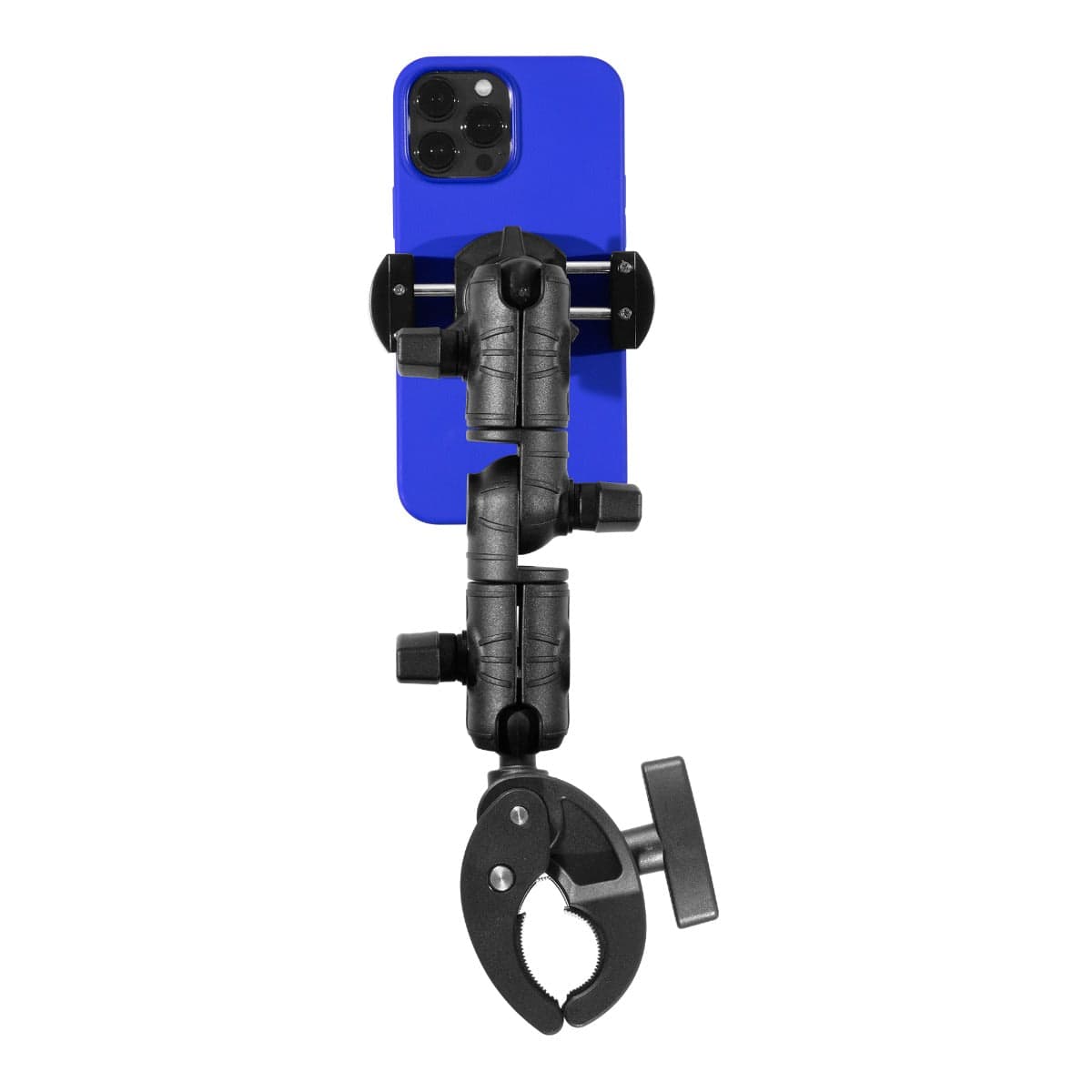
A practical iBOLT mounting setup positions a device inside a commercial vehicle workspace.
If you drive a semi truck, you already know the problem. Your tablet is propped against the cupholder, wedged under the dash lip, or flat on the passenger seat. Every rough patch of highway sends it sliding. Every glance at the screen means taking your eyes off the road longer than it should. A proper tablet mount for a semi truck is not a luxury; it is the difference between a cab that works for you and one that fights you all day.
This guide covers what actually matters when choosing tablet mounts for trucks: vibration resistance, no-drill options for company drivers, ELD compliance positioning, and cable management. Two iBOLT mounts are highlighted below because they solve different versions of the same problem.
Why Tablet Positioning Matters More Than You Think
The FMCSA's ELD guidance states that a portable ELD must be fixed during commercial motor vehicle operation and visible from the driver's normal seated position. That language matters. A tablet sitting loose on the dash does not meet the fixed requirement. A tablet mounted too low, too far right, or behind the steering wheel may not meet the visible requirement either. Getting the mount right is part of staying compliant, not just staying organized.
Beyond compliance, reach distance is a real fatigue factor on long hauls. Drivers who have to lean forward or sideways to tap a screen are burning energy and creating distraction. The right semi truck tablet mount puts the screen at eye level, within easy arm's reach, without blocking sight lines to mirrors or gauges.
The No-Drill Problem for Company Drivers
Company drivers often cannot modify the vehicle. No drilling into the dash, no permanent hardware, no modifications that could void a lease or trigger a maintenance write-up. That rules out a lot of the heavy-duty fixed-base mounts designed for owner-operators.
Suction cup mounts on flat windshield or dash surfaces are the most practical answer here, provided the suction mechanism is industrial-grade and not the kind that pops loose on a hot afternoon. Gooseneck mounts that clip into existing openings, seat-rail systems that use factory bolt points, and wedge mounts that sit in the cupholder without adhesive are all worth considering depending on the cab layout.
Vibration Is the Real Enemy
A consumer-grade suction cup mount that works fine in a passenger car will fail in a semi truck. Highway vibration at highway speed is manageable. But gravel yards, rail crossings, dock approaches, and rough secondary roads create a different category of stress on a mount. The arm flexes, the ball joint loosens, and eventually the tablet drops.
What separates a truck-rated mount from a car mount is the material in the arm and ball joint, the clamping force of the suction cup, and whether the cradle grips the tablet on all four sides or just the bottom. Metal arms and metal ball joints hold their position under vibration. Plastic arms develop play over time and let the screen drift out of angle.
Two Mounts Built for Truck Cabs
For drivers who need a no-drill solution that can move between trucks, the iBOLT TabDock™ IncrediBOLT™ 360 Suction Mount is built specifically for commercial vehicle environments. The 6-inch metal arm and suction base are designed to handle the vibration loads that semi trucks generate, and the 360-degree multi-angle head lets you dial in the exact viewing position from your normal seated position, which is exactly what FMCSA's fixed-and-visible standard requires. It fits tablets from 7 to 10 inches, covering most ELD tablets and iPads in fleet use today.
For owner-operators or fleet managers who can install a permanent base, the iBOLT Dock'n Lock Bizmount™ AMPS Drill Base Mount takes a different approach. The AMPS-pattern drill base locks the mount to the dash or console permanently, and the tamper-resistant locking system with keyed hardware means the tablet stays put even in high-traffic fleet situations where multiple drivers share the same truck. The dual 1-inch ball joints give you full 360-degree adjustability after installation, and the composite construction handles the heat and vibration of a working cab without cracking or loosening over time. It also fits tablets from 7 to 11 inches and is compatible with industry-standard mounting arms if you want to extend or reposition later.
A mounted tablet that runs out of battery mid-shift is not much better than no mount at all. When you are evaluating tablet truck mounts, think about where the charging cable exits the tablet and whether the cradle blocks that port. Side-exit USB-C ports need a cradle that leaves the bottom and side edges clear. Bottom-exit cables need a routing path that does not put stress on the connector over thousands of miles of vibration.
Cable management also affects cab cleanliness. A loose charging cable draped across the dash is a snag hazard and looks unprofessional during inspections or customer pickups. Look for mounts with cable clip points or arms that allow the cable to run along the arm itself rather than hanging free.
Shared Trucks and Multi-Driver Fleets
Fleet setups often mean one truck, multiple drivers, and potentially different tablets or ELD devices. If the mount needs to accommodate different drivers with different seating positions, adjustability is not optional. A mount that locks into one angle after installation creates friction every time a new driver climbs in. The ball-joint systems on both iBOLT options above allow quick repositioning without tools, which matters when a driver swap happens at a terminal at 2 a.m.
Locking cradles also matter in fleet contexts. A tablet left in a shared truck overnight is a theft risk. The Dock'n Lock Bizmount's keyed locking system addresses that directly, keeping the device secured to the mount even when the driver is off-duty.
Frequently Asked Questions
Where should an ELD tablet be mounted in a semi truck?+-
The FMCSA requires the ELD to be fixed during operation and visible from the driver's normal seated position. The best location is typically on the dash or lower windshield area within easy sightline, not on the passenger side or below the steering wheel where the driver must lean to see it.
Can I use a phone as an ELD in a semi truck?+-
Yes, the FMCSA allows smartphones and wireless devices as ELDs if the device and software meet the technical specifications and the device is fixed and visible during operation. The mount requirements apply equally to phones and tablets.
What is the best no-drill tablet mount for a company truck?+-
A heavy-duty suction cup mount rated for commercial vehicles is the most practical no-drill option. The iBOLT TabDock™ IncrediBOLT™ 360 Suction Mount is built for exactly this use case, with a metal arm and industrial suction base that handles truck vibration without permanent installation.
Will a tablet mount work across different truck makes and models?+-
Universal suction and AMPS-pattern mounts work across most cab layouts because they attach to flat surfaces rather than vehicle-specific brackets. If your cab has an unusual dash curve or limited flat area, a seat-rail or floor-mount system may be a better fit.
How do I keep the charging cable from becoming a problem?+-
Choose a cradle that leaves the charging port unobstructed, route the cable along the mount arm using cable clips, and use a right-angle adapter if the cable exit direction creates tension on the connector. Hardwired USB power sources at the mount location eliminate the need for long cable runs entirely.



Leave a comment
This site is protected by hCaptcha and the hCaptcha Privacy Policy and Terms of Service apply.