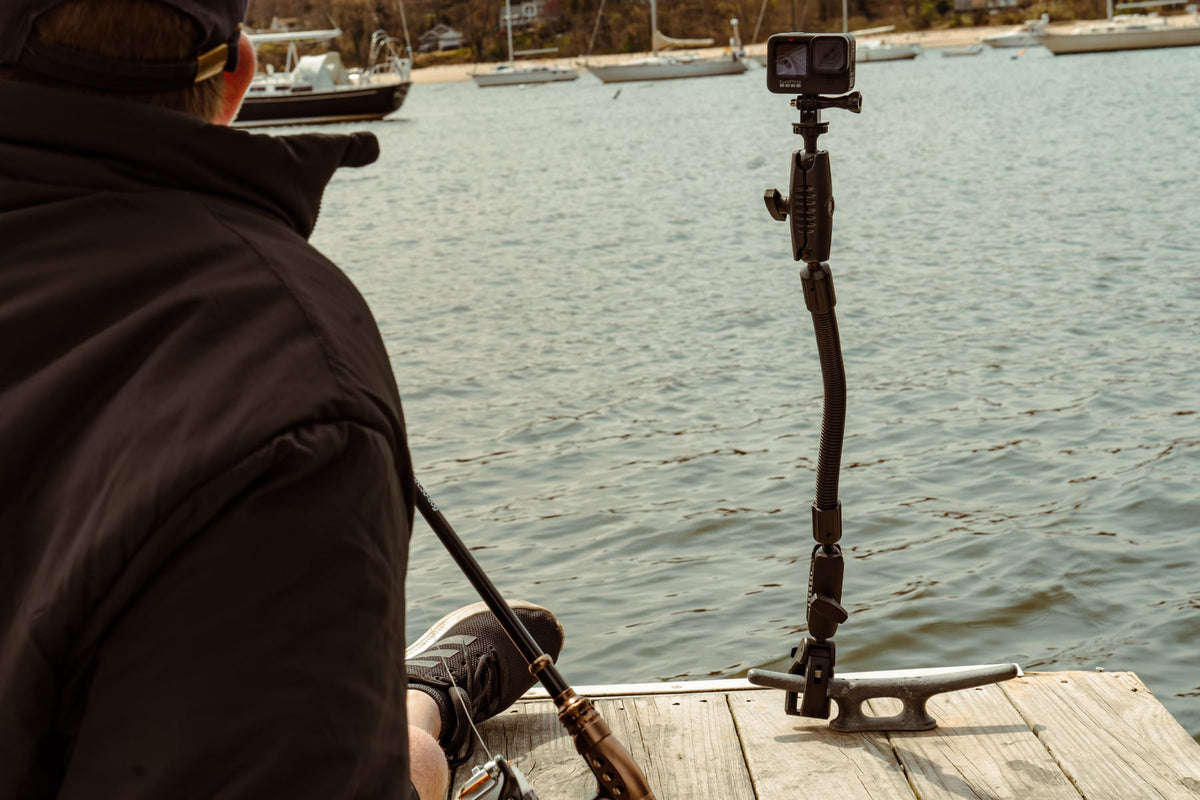
A reliable fish finder is only as good as the mount holding it steady. Whether you are running a center console offshore, a bass boat on a rail system, or a kayak with limited real estate, the right mount keeps your screen visible, your connections dry, and your electronics intact through chop and wake. This guide walks through the mounting options, what to check before you buy, and how to keep your unit secure once it is installed.

How to Choose the Right Fish Finder Mount for Your Boat
Start with your vessel type and where you actually want the screen positioned. A mount that works well on a bass boat rail may not suit a center console dash, and a permanent drill-base setup on a rented pontoon is not always an option.

Two approaches cover most fishing setups: rail-clamp mounts and drill-base mounts. Rail mounts clamp onto an existing handlebar or gunwale rail and let you rotate, tilt, or remove the unit without tools. Drill-base mounts bolt directly into the deck or console and offer a fixed, permanent connection point that holds up under sustained vibration and rough water.
The iBOLT Universal Marine Fish Finder Handlebar Rail Mount is a good starting point if your boat already has a rail to clamp onto. It installs without drilling, holds the fish finder at an adjustable angle, and can be repositioned as your setup changes.
If you want a permanent connection instead, the iBOLT Fish Finder Drill-Base Mount anchors directly to the boat's surface. Drilling into your hull or console is a bigger commitment, so measure twice and confirm the mounting location has enough clearance for cable routing behind the unit before you drill.
Types of Fish Finder Mounts and When to Use Them
Not every boat calls for the same mounting method. Here is how the main types break down:
Handlebar Rail Mounts: Best for boats with an existing rail system, common on smaller vessels and kayaks. They install quickly and allow repositioning without permanent modification.
Drill Base Mounts: Best for larger vessels or anglers who want a fixed, high-stability connection point that will not shift under sustained vibration or rough water. These require drilling and are meant to stay put.
Clamp Handlebar Rail Mounts: A middle option for anglers who want a secure hold without drilling into the hull. The iBOLT Incredibolt Clamp Handlebar Rail Mount and the iBOLT Universal Marine Fish Finder Incredibolt Clamp Handlebar Rail Mount both use a 360-degree clamp design that goes on and comes off without tools, which matters if you swap the unit between boats or store it after each trip.

What to Verify Before You Buy
Before ordering any mount, confirm these details against your specific fish finder and boat:
- Mounting surface: Is it a rail, a flat deck, a console, or a gunwale? Rail diameter and shape matter for clamp mounts.
- Device size and weight: Larger multi-function displays need a mount rated to hold that weight steady in chop, not just at idle.
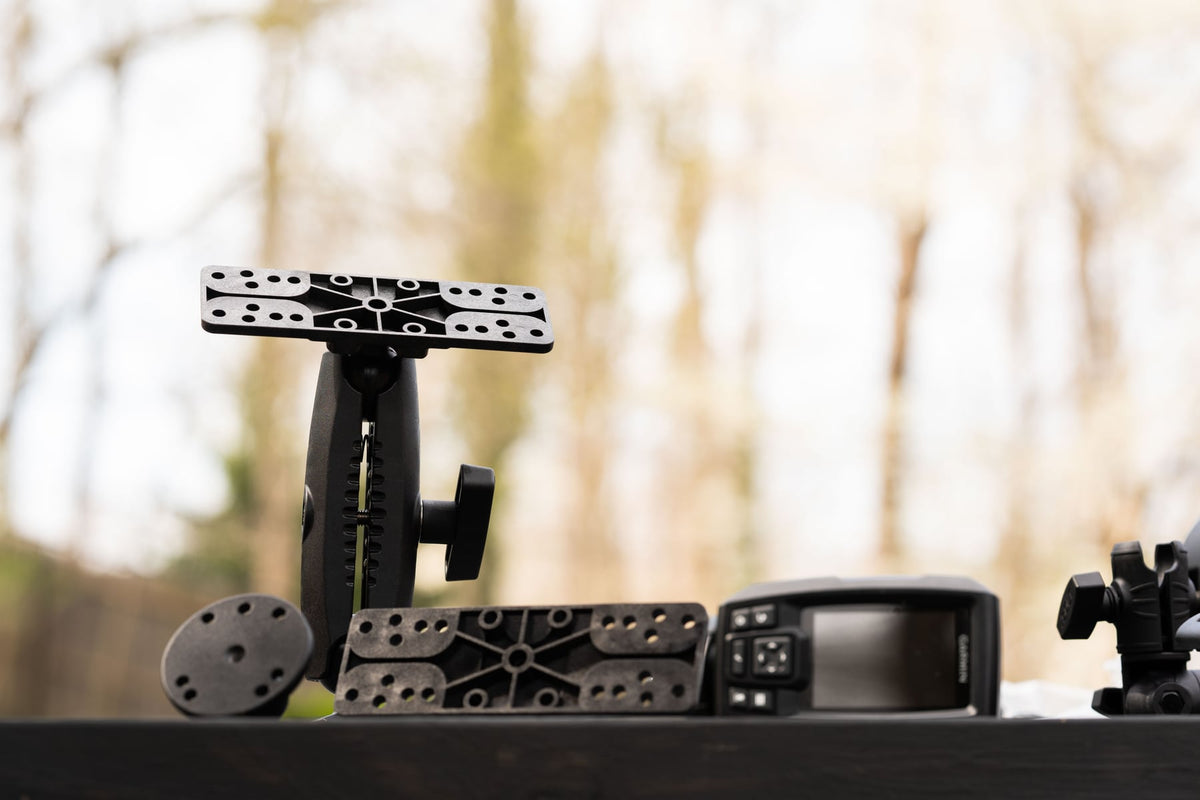
- Bolt pattern and ball size: Many fish finder bases use a AMPS rectangular pattern or a round drill-base pattern. Match the base plate to your unit's existing mounting holes before purchase.
- Cable routing: Confirm there is room behind the mount for power and transducer cables to run without a sharp bend or pinch point.
- Removal frequency: If you take the unit off after every trip, a clamp mount saves time. If it stays on the boat permanently, a drill-base mount offers more stability.
- Vibration and water exposure: Open water, high speeds, and rough conditions call for a more rigid mounting method than calm inshore or lake fishing.

The iBOLT Universal Marine Fish Finder Incredibolt Clamp Handlebar Rail Mount is built to address several of these points at once, offering a secure clamp connection along with an adjustable arm so you can angle the screen for visibility from different positions on the boat.
DIY Installation vs Professional Help
 Yes, installing your fish finder mount can most certainly be a do-it-yourself task. For instance, iBOLT Garmin Stricker 4 Fish Finder Incredibolt 360 Clamp Handlebar Rail Mount's intuitive design allows for a straightforward, hassle-free set-up. Simply Clamp onto any round or flat surface and you are ready to go!
Clamp and rail mounts are generally straightforward to install yourself since they do not require drilling. Drill-base mounts are also DIY-friendly for anglers comfortable working with a drill and marine-grade sealant, but if you are hesitant to put holes in your hull or console, it is worth having a marine technician handle the installation. Either way, confirm the mounting location before committing so you are not drilling twice.
Keeping Your Mount Stable in Rough Water
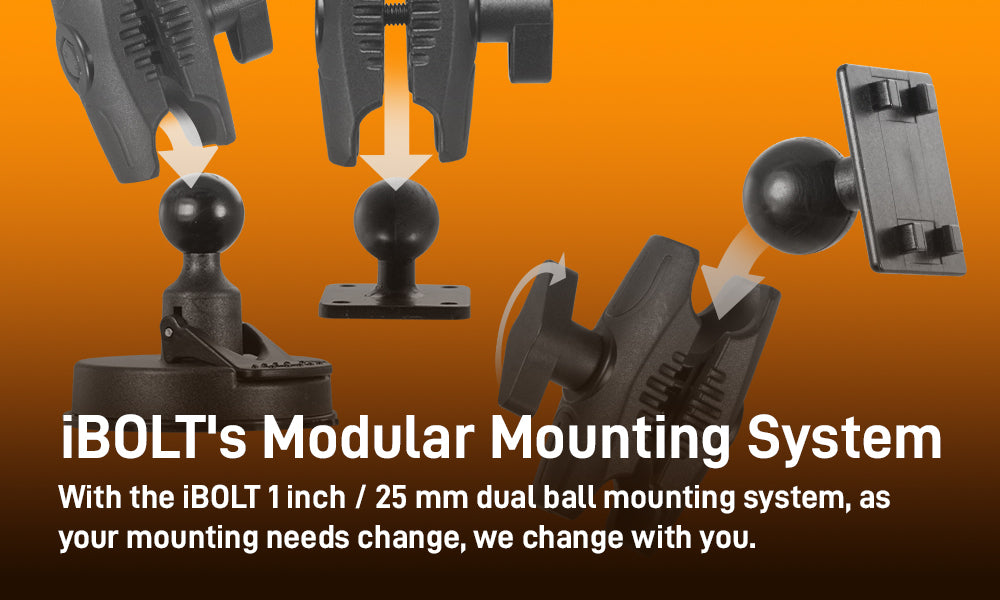
Stability comes down to three things: the mount's build quality, the mounting method, and how well it matches your boat's typical conditions. A rectangular AMPS drill-base mount with a dual ball design, like the composite iBOLT Universal Marine Electronic Fish Finder Mount, spreads load across a wider footprint and lets you adjust viewing angle without loosening the whole assembly. For boats regularly in open water or higher speeds, the iBOLT 38mm Composite Universal Marine Fish Finder to Metal AMPs Drill Base Mount pairs a composite base with a metal AMPS plate for added rigidity under sustained vibration.
Checking Brand and Model Compatibility
 Absolutely! Our iBOLT fish finder mounts demonstrate a high level of versatility and adaptability, designed with the purpose of accommodating a broad spectrum of fish finder brands and models. Ensuring our mounts integrate seamlessly with your equipment is a priority - we strive to deliver a solution that not only meets but exceeds your expectations.
Always check the product description for the specific hole pattern and dimensions your fish finder requires, since manufacturers vary their mounting hardware across model years. As a general reference, iBOLT's fish finder equipment plates are built to work with a range of common units, including Garmin GPSmap series (7x12, 7x10, 12x2, 7x08, 9x2), Garmin Striker 9, Echo Map Plus series (6 inch, 7 inch, 9 inch), and Lowrance HDS 9 and HDS 12 models. The round AMPS plate adapter uses a three-hole drill base pattern that fits units like the Garmin Striker 4 and Raymarine Dragonfly 7 Pro.

If your exact model is not listed, verify the bolt pattern and screen size against the mount's spec sheet before ordering. Fish finder mounting hardware is not fully standardized across brands, so a quick measurement check saves a return.
FAQ: Fish Finder Mounts
Do I need to drill into my boat to install a fish finder mount?
No. Rail-clamp and Incredibolt clamp mounts attach without drilling. Drill-base mounts require permanent holes but offer more rigidity for larger units or rough conditions.
Will an iBOLT mount fit my specific fish finder model?
Check the product description for the bolt pattern and dimensions. iBOLT plates are built to work with common Garmin, Lowrance, and Raymarine models, but always confirm your exact model against the listed specs before ordering.
Can I remove and reinstall a clamp mount easily between trips?
Yes, that is the main advantage of clamp-style mounts like the Incredibolt. They install and remove without tools, which is useful if you store your fish finder off the boat or move it between vessels.
What size fish finder can these mounts support?
This depends on the specific mount's rated capacity and base size. Larger multi-function displays need a wider footprint, such as the 2.75 inch composite base or the metal AMPS plate options, to stay steady in chop.
Is a drill-base mount better than a clamp mount for offshore fishing?
For sustained high speed or consistently rough water, a drill-base mount generally provides a more rigid connection. Clamp mounts work well for calmer conditions or when you need to remove the unit regularly.
How do I make sure cables are not pinched after installation?
Before finalizing any mount, route the power and transducer cables through the intended path and check for tight bends or contact points where the cable could wear over time.
Related iBOLT Mounting Options

iBOLT Universal Marine Fish Finder IncrediBOLT™ Clamp / Handlebar/ Rail Mount
Useful for keeping electronics positioned on boats and around marine work areas.

iBOLT Universal Marine Fish Finder Handlebar/ Rail Mount
Useful for keeping electronics positioned on boats and around marine work areas.

iBOLT Garmin Striker 4 / Fish Finder IncrediBOLT™ 360 Clamp / Handlebar / Rail Mount
Useful for keeping electronics positioned on boats and around marine work areas.

iBOLT Garmin Striker 4 / Fish Finder Dual Arm Handlebar, Rail Mount
Useful for keeping electronics positioned on boats and around marine work areas.

Leave a comment
This site is protected by hCaptcha and the hCaptcha Privacy Policy and Terms of Service apply.