A fish finder only helps you catch more fish if it stays exactly where you mounted it, through wake, chop, and full-throttle runs. A unit that vibrates loose, tilts out of your sightline, or gets ripped off its bracket in rough water is worse than no fish finder at all. Whether you run a Garmin STRIKER, a Lowrance, a Humminbird, or another brand, the mounting hardware matters as much as the electronics. iBOLT builds marine mounting systems around industry-standard AMPS patterns and ball sizes so you can match a mount to your unit, your boat, and how you actually fish.

Why Fish Finder Mounting Deserves Real Attention
A fish finder's display only earns its keep if you can see it at a glance while running the trolling motor or working a rod. Poor mounting leads to glare, blocked sightlines, and constant readjustment, which is exactly when you miss the mark showing fish under the boat. A secure, correctly positioned mount keeps the screen readable, keeps the transducer cable from getting yanked, and keeps the unit itself from becoming a projectile in rough conditions.
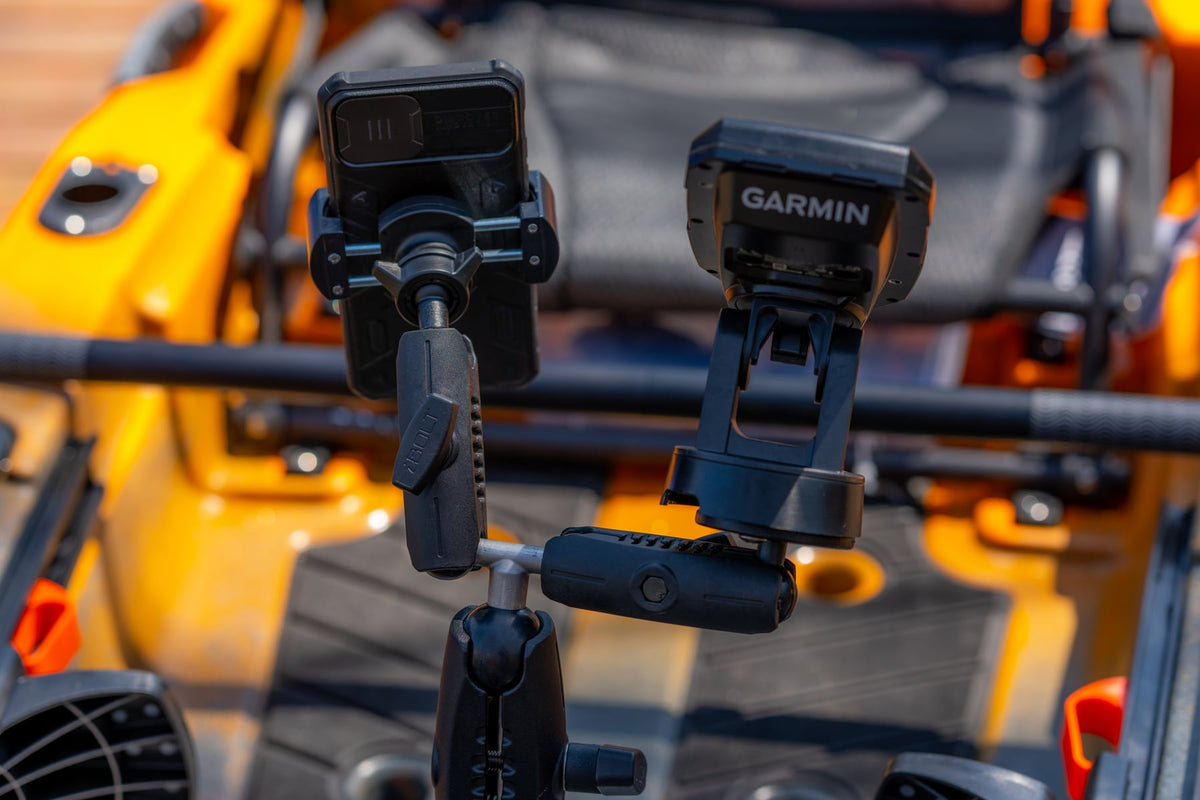
iBOLT's marine mounts use a rubber-coated dual ball arm design, which absorbs vibration from the hull and engine better than a rigid connection. That matters on aluminum boats and smaller craft where vibration transfers directly into the mounting deck.

What to Verify Before You Buy a Fish Finder Mount
Universal does not mean identical. Before ordering, check these details against your specific unit and boat:
- AMPS hole pattern: Most fish finder brackets use the industry-standard AMPS rectangular pattern. Confirm your unit's back bracket matches a 4-hole AMPS footprint before assuming a mount will bolt straight on.
- Ball size: iBOLT offers both 25mm (1-inch, B-size) and 38mm (1.5-inch, C-size) ball options. Larger displays and heavier units generally do better on the 38mm ball for extra holding strength and reduced flex.
- Mounting surface: Decide whether you are drilling into a dash, gunwale, or console, or whether you need a track or clamp-style base instead. Composite AMPS drill bases are built for permanent installation.
- Cable routing: Plan where the transducer and power cables will run before you drill. A mount placed too close to a hinge, hatch, or seat can pinch cables over time.
- Vibration exposure: Aluminum hulls and smaller boats transmit more engine and hull vibration than larger fiberglass boats. A dual ball design with rubber coating helps absorb that movement.
- Removal frequency: If you swap the fish finder between boats or store it after each trip, a quick-release ball joint saves time versus a fully fixed bracket.
iBOLT Mount Options for Fish Finders
iBOLT's marine lineup covers the range of fish finder sizes and mounting needs. Here are the core options worth comparing:


The iBOLT 38mm / 1.5 inch Ball Composite Universal Marine Fish Finder Mounting Plate gives you a straightforward AMPS-pattern plate with a 38mm ball, built for anglers who already have a compatible arm or base and just need the correct fish finder side connection.


iBOLT 25mm/1-inch Composite Universal Marine Electronic Fish Finder to Composite AMPS Drill Base
This B-size mount pairs a composite AMPS drill base with a 2.75-inch composite bizmount arm and 25mm balls on both ends. It suits smaller and mid-size fish finder displays where a compact footprint matters, and it is built for permanent installation with a standard 4-hole AMPS drill pattern. Verify your unit's back bracket uses AMPS spacing before drilling, since not every fish finder ships with that pattern out of the box.
Step up to the C-size mount when you are running a larger display or want more holding strength against vibration. This version uses a 3.5-inch composite bizmount arm with 38mm grips on a standard AMPS drill base, and it is rated for permanent mounting. The larger ball diameter gives more resistance to torque, which helps on boats that see rough water or higher engine vibration.

Adding a Camera Mount Alongside Your Fish Finder
iBOLT 38mm/1.5-inch Composite Diamond AMPS Pattern to 1/4-20 Composite Camera Dual Ball Screw Mount
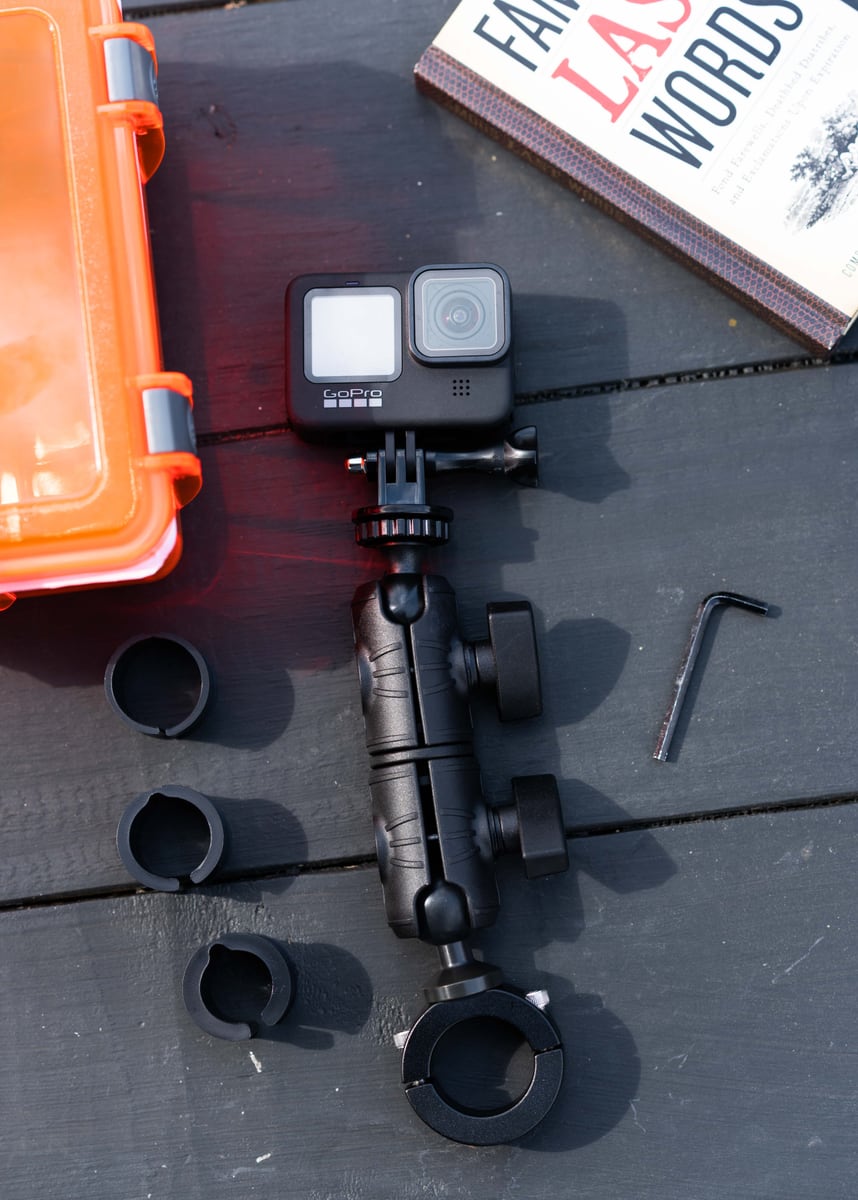
If you want to document the catch as well as find it, this mount adds a standard 1/4-20 camera screw to the same AMPS-compatible ball system. It works well for a GoPro or similar action camera mounted near your fish finder setup, using the same 2-hole drill pattern family so you are not improvising a second mounting solution on the boat.
Installation and Positioning Tips
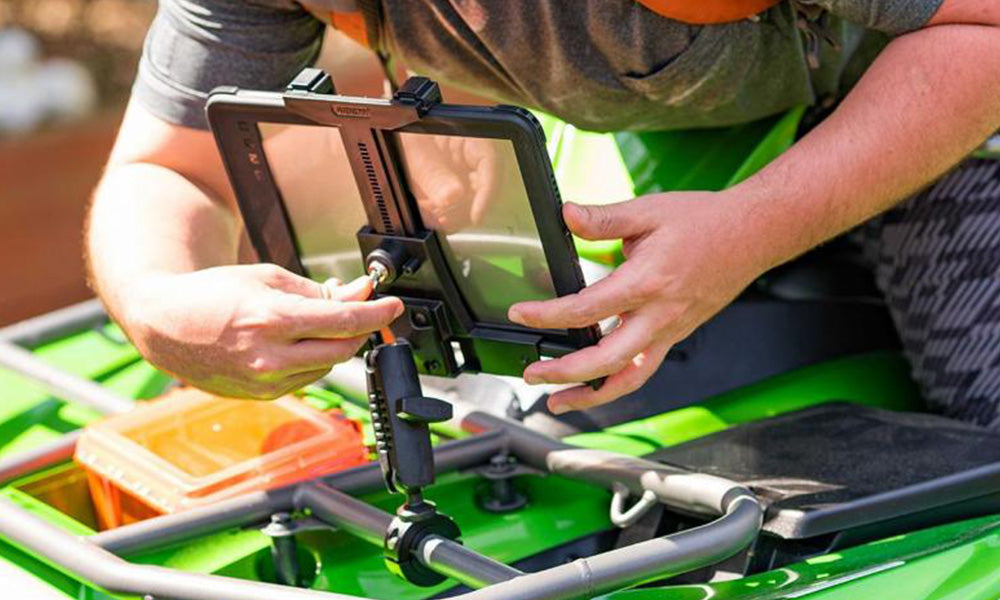
Mount your fish finder where you can see the screen without leaning, and where the transducer cable has a clean run to the transom or trolling motor without sharp bends. On aluminum boats, back the drill base with a backing plate or fender washers if the mounting surface is thin, since vibration will work against unsupported screws over time. On fiberglass consoles, seal the drill holes before finishing installation to keep water out of the substrate. If you fish from a kayak or small craft, a lower-profile 25mm setup often balances holding strength with weight better than the larger C-size hardware.
Related iBOLT Mounting Options

iBOLT Garmin Striker 4 / Fish Finder Dual Arm Handlebar, Rail Mount
Useful for keeping electronics positioned on boats and around marine work areas.

iBOLT Garmin Striker 4 / Fish Finder IncrediBOLT™ 360 Clamp / Handlebar / Rail Mount
Useful for keeping electronics positioned on boats and around marine work areas.

iBOLT Garmin Striker 4 / Fish Finder Handlebar, Rail Mount
Useful for keeping electronics positioned on boats and around marine work areas.

iBOLT Universal Marine Fish Finder Dual Arm Handlebar/ Rail Mount
Useful for keeping electronics positioned on boats and around marine work areas.
FAQ
Will an iBOLT mount fit my specific fish finder brand?
iBOLT's fish finder mounts are built to the industry-standard AMPS hole pattern, which many Garmin, Lowrance, and Humminbird units use on their mounting brackets. Check your unit's back bracket against the AMPS 4-hole spacing before ordering to confirm fitment.
What is the difference between the 25mm and 38mm ball mounts?
The 25mm (1-inch, B-size) ball suits smaller and mid-size fish finder displays and lighter-duty use. The 38mm (1.5-inch, C-size) ball offers more holding strength and resistance to vibration, which benefits larger displays or boats that see rougher water.
Can I use the same mount for a fish finder and an action camera?
Yes, with the right adapter. iBOLT's camera-specific mount uses a 1/4-20 screw pattern on the same AMPS-compatible ball system, so you can run a fish finder and a camera off compatible mounting hardware without mixing incompatible brackets.
Do these mounts require drilling into my boat?
The composite AMPS drill bases are designed for permanent installation, which means drilling. If you do not want to drill, look for a clamp or track-based AMPS adapter instead and confirm it pairs with the same ball size as your fish finder plate.
How do I stop cable wear at the mount?
Route the transducer and power cables so they have slack at the mount point and avoid tight bends near hinges or moving parts. Secure the cable run with clips along the hull rather than letting it hang loose near the mount.
What if my fish finder did not come with an AMPS bracket?
Many fish finders ship with a proprietary bracket. In that case, you will need an adapter plate that converts your unit's native bracket to the AMPS pattern before it can connect to an iBOLT AMPS mount. Confirm this compatibility with the manufacturer's bracket specs before purchasing.

Leave a comment
This site is protected by hCaptcha and the hCaptcha Privacy Policy and Terms of Service apply.