AMPS Mounts Explained: Build a Compatible, Upgradeable System
Problem proposition: Buyers who don't understand AMPS compatibility end up replacing entire mount setups when they only needed an adapter plate; this article shows how the AMPS standard works and which iBOLT adapter plates let you reuse what you already have.
Featured product links: iBOLT™ 38mm / 1.5 inch Metal Diamond 2-Hole AMPS Adapter Plate, iBOLT AMPS to VESA 75/100 Plate
You replaced a tablet. Now the new device doesn't fit the mount you already have bolted to your vehicle or workstation. Before you pull the whole thing out and start over, check the back of your mount for a four-hole rectangular pattern. If it's there, you're working with an AMPS interface, and a single adapter plate is probably all you need.
This guide explains what AMPS mounts are, how they compare to other mounting standards like VESA and ball mounts, and which iBOLT adapter plates solve the most common compatibility problems without requiring you to replace hardware that's already doing its job.
What the AMPS Pattern Actually Is
AMPS stands for Advanced Mobile Phone System, a telecommunications standard that's long obsolete. The four-hole mounting pattern it introduced, however, became one of the most widely adopted interfaces in device mounting. The standard hole spacing sits at approximately 30 mm by 38 mm, arranged in a rectangular layout. That consistent geometry is why a mount made for a fleet vehicle can accept a holder designed for a medical cart or a forklift display without any modification to the base or arm.
The pattern appears across vehicle dashboards, industrial workstations, marine electronics, warehouse equipment, and public safety vehicles. Its staying power comes from one thing: when manufacturers agree on hole spacing, buyers can mix components without custom fabrication.
How AMPS Compares to VESA, Ball Mounts, and Other Standards
AMPS is not the only mounting standard you'll encounter. Understanding where it fits helps you choose the right adapter rather than the wrong arm.
-
VESA 75 and VESA 100: Monitor and display mounting patterns with 75 mm or 100 mm hole spacing. Common on tablets, monitors, and kiosk screens. Not interchangeable with AMPS without an adapter plate.
-
Ball mounts: Spherical socket systems measured by ball diameter. Common sizes include 17 mm (Garmin-style), 20 mm, 25 mm (1-inch B-size), and 38 mm (1.5-inch C-size). Ball mounts excel at quick angle adjustment but require matching socket sizes across components. For a full breakdown of ball mount sizes, see our ball mounts guide.
-
1/4-20 thread: Standard camera tripod thread. Found on some GPS units and action cameras. Requires a threaded adapter to connect to AMPS or ball mount systems.
-
AMPS: Flat plate interface. Works as the connection point between an arm and a device holder. Pairs with any arm that terminates in an AMPS-pattern receiver.
If you're unsure which standard your existing hardware uses, our complete guide to mounting standards covers AMPS, VESA, and every common ball mount size in one place.
The Modular Logic: Why AMPS Saves You Money Over Time
A modular mounting system has four layers: base, arm, adapter plate, and device holder. The AMPS pattern lives at the adapter plate layer. When your device changes, you swap the holder and, if needed, the plate. The base and arm stay in place.
This matters most in fleet and industrial environments where mounts are installed in dozens or hundreds of vehicles. Replacing a $15 adapter plate instead of a $120 arm assembly across a 50-vehicle fleet is a straightforward maintenance decision. It also matters for individual buyers who want to reuse a well-positioned dashboard mount when they upgrade their GPS or switch from a phone to a tablet.
The same logic applies across trucks, boats, forklifts, restaurant point-of-sale stations, and office desks. The base stays. The plate adapts. For a deeper look at how modular systems scale, see our modular mounting system guide.
Which iBOLT AMPS Adapter Plates Solve the Most Common Problems
Two situations come up repeatedly: a device with an AMPS back that needs to connect to a standard arm, and a VESA-pattern monitor or tablet that needs to connect to an AMPS mount. iBOLT makes a direct plate for each.
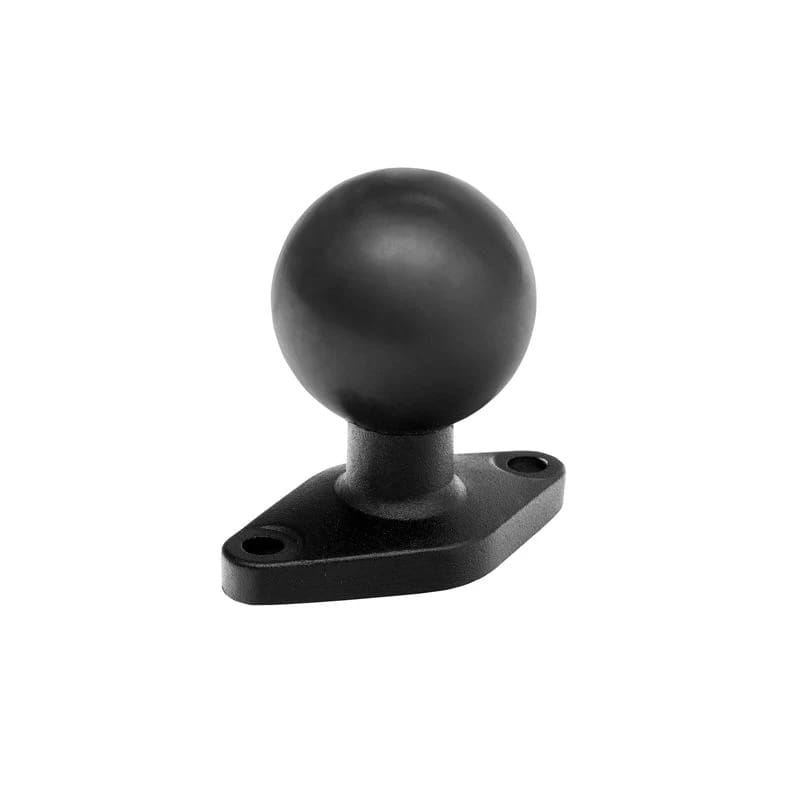
The iBOLT 38mm / 1.5 inch Metal Diamond 2-Hole AMPS Adapter Plate is built from high-strength aluminum and fits all industry-standard 1.5-inch (38mm) C-size mounting arms. The two-hole AMPS pattern keeps the footprint compact, which matters in tight installations like forklift cabs, wheelchair tracks, and marine helm stations. At $16.95, it's the part that lets you keep a quality arm and simply add a new connection point for a different device.

iBOLT™ 38mm / 1.5 inch Metal Diamond 2-Hole AMPS Adapter Plate - $16.95
If your device uses a VESA 75 or VESA 100 pattern and your existing mount terminates in a four-hole AMPS receiver, the iBOLT AMPS to VESA 75/100 Plate bridges that gap directly. It's powder-coated aluminum, compatible with both VESA 75 and VESA 100 spacing, and priced at $14.95. This is the plate that makes a vehicle arm work with a monitor or tablet that was designed for a desk stand, without any drilling or custom fabrication.

iBOLT AMPS to VESA 75/100 Plate - $14.95
What to Measure Before You Order an AMPS Adapter
Adapter plates are simple parts, but ordering the wrong one wastes time. Check these five things before you add anything to your cart:
-
Hole pattern on your existing mount: Count the holes and measure the spacing. Four holes at 30 mm by 38 mm is standard AMPS. Two holes in a diamond layout is the 2-hole AMPS variant.
-
Hole pattern on your device or holder: VESA 75, VESA 100, and AMPS are not the same. Measure before assuming.
-
Ball diameter if you're using a ball mount arm: 20 mm, 25 mm, and 38 mm arms are not interchangeable. Confirm the size on your arm before choosing an adapter that terminates in a ball socket.
-
Device weight: Heavier tablets and ruggedized devices need arms rated for the load. The adapter plate is rarely the weak point, but the arm and base need to match the weight.
-
Surface type and arm length: A dashboard mount in a compact car has different clearance requirements than a pole mount in a warehouse. Confirm the arm reaches the position you need before finalizing the plate choice.
Frequently Asked Questions
Is AMPS the same as a ball mount?
No. AMPS is a flat four-hole plate interface. Ball mounts use a spherical socket system. Some arms combine both: a ball socket on one end and an AMPS plate on the other. You can also use an adapter to connect AMPS hardware to a ball mount arm.
What is a 2-hole AMPS pattern versus a 4-hole AMPS pattern?
The standard AMPS pattern uses four holes. The 2-hole diamond variant uses two holes in a diagonal layout and is common in compact or space-constrained installations like forklifts and wheelchairs. Both follow AMPS spacing conventions but are not directly interchangeable without the correct plate.
Can I connect a VESA monitor to an AMPS mount?
Yes, with the right adapter plate. The iBOLT AMPS to VESA 75/100 Plate connects VESA 75 and VESA 100 devices to standard four-hole AMPS mounts.
What size ball mount do I need for 20mm ball mount accessories?
20mm ball mount accessories require a 20mm ball socket on the arm or base. Confirm the ball diameter on your existing hardware before purchasing accessories. Our ball mounts guide covers 20mm, 25mm, and 38mm systems in detail.
Do iBOLT AMPS adapter plates work with other brands' arms?
iBOLT AMPS plates follow industry-standard hole spacing, so they are designed to work with any arm that uses the same standard AMPS or 38mm C-size interface. Always verify hole spacing and thread size on your specific arm before ordering.

Leave a comment
This site is protected by hCaptcha and the hCaptcha Privacy Policy and Terms of Service apply.