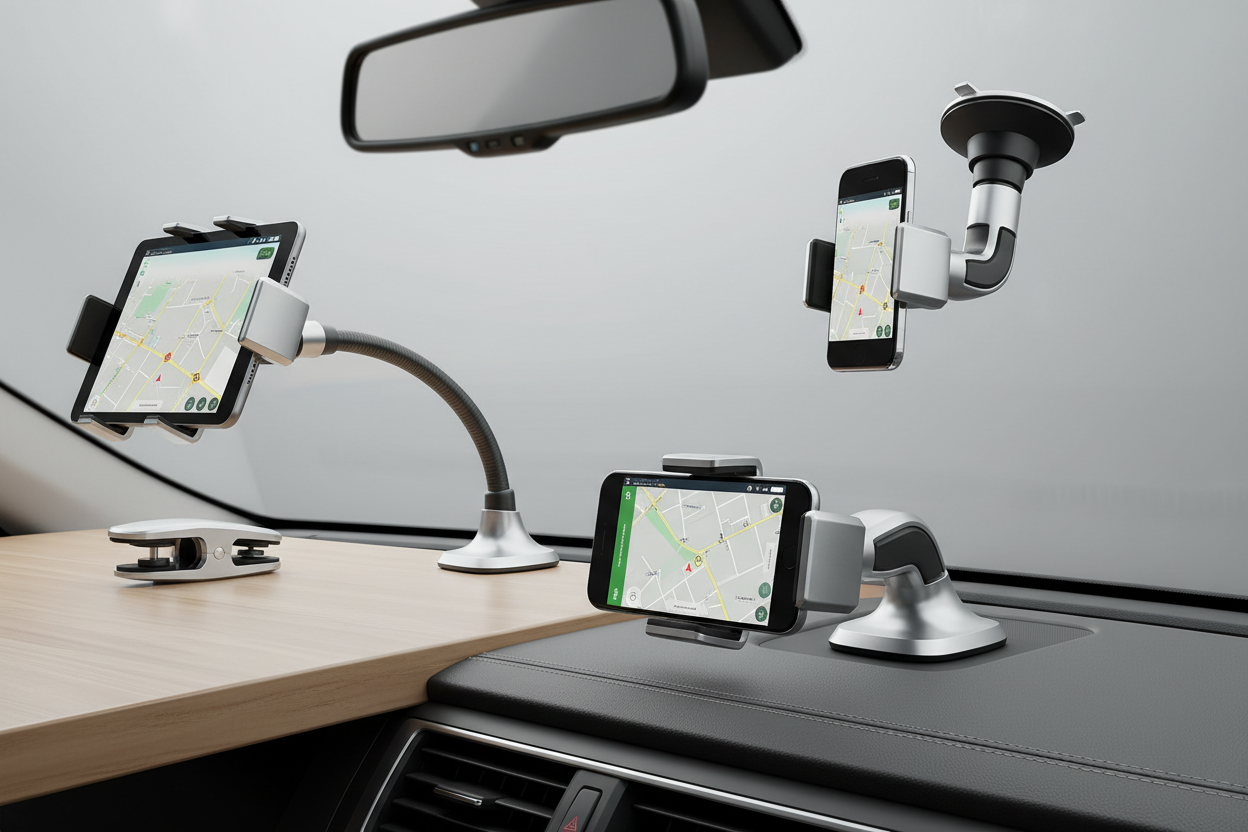
Tablets, smartphones, barcode scanners, cameras, and GPS units have become standard equipment in delivery vans, warehouses, restaurants, clinics, retail counters, and content studios. As more workflows depend on these devices, how they are physically positioned has become just as important as the software running on them. A device that slides off a dashboard, disconnects mid-scan, or sits at the wrong angle costs time and, in some environments, creates real safety risk.
This is where Professional Mounting Solutions come in. Whether the environment is a delivery truck, a forklift, a hospital hallway, or a streaming setup, a properly chosen mount keeps a device stable, visible, and protected through repeated daily use, not just for a photo on day one.
What Separates a Professional Mount From a Consumer Mount
Consumer mounts are usually built around one phone size and one use case, like a windshield suction mount for occasional navigation. Professional mounting systems are engineered for repeated use, vibration, temperature swings, and device turnover. The components typically include:
- A mounting base (drill-down, adhesive, clamp, pedestal, or AMPS plate)
- An arm or extension for reach and positioning
- A ball joint or articulating connector for angle adjustment
- A device holder sized to the tablet, phone, scanner, or camera
- Adapter plates that bridge different mounting standards
The value of this setup is that each part can be swapped independently. When a fleet upgrades from a 7 inch tablet to a 10 inch tablet, or a warehouse switches barcode scanner vendors, only the holder needs to change, not the entire mount.
What to Verify Before You Buy a Mount
Fitment problems are the most common reason mounting purchases get returned. Before ordering, confirm the following:
- Mounting surface: Is it a flat dash, a curved pillar, a pole, a cart rail, a wall, or a desk? Bases are surface-specific.
- Vibration exposure: Forklifts, delivery trucks, and boats generate sustained vibration. Confirm the arm and joint are rated to hold position without drifting or loosening over time.
- Device size and weight: A holder sized for a phone will not safely support a 10 inch tablet in a case. Check the holder's adjustable range against the device plus any protective case.
- Charging and cable routing: If the device needs to stay powered, verify the holder accommodates a charging cable at the correct angle and that the arm has a path to route the cable without pinching.
- Removal frequency: A device pulled in and out dozens of times a day needs a holder built for quick-release, not a friction fit meant for occasional use.
- Security: In shared vehicles, retail counters, or public-facing kiosks, a locking holder or key-secured mount may be worth the added cost to prevent theft.
- Ball and interface size: Many arms and bases use standard ball sizes, commonly 17mm, 20mm, 25mm (1 inch), 38mm (1.5 inch), and 57mm (2.5 inch). Confirm the ball size on any existing arm before buying a new base or holder, since mismatched sizes will not connect without an adapter.
Where These Systems Get Used
Fleet and Transportation
Drivers rely on mounted tablets and GPS units for navigation, dispatch, and electronic logging. A stable mount keeps the screen in a driver's sightline without blocking visibility, and a vibration-rated arm keeps the device from bouncing loose on rough roads.
Warehousing and Material Handling
Forklifts, pick carts, and packing stations often run tablets or handheld computers for inventory and routing. Mounts here need to survive repeated impact and vibration while keeping the device within easy reach of a gloved hand.
Retail and Restaurants
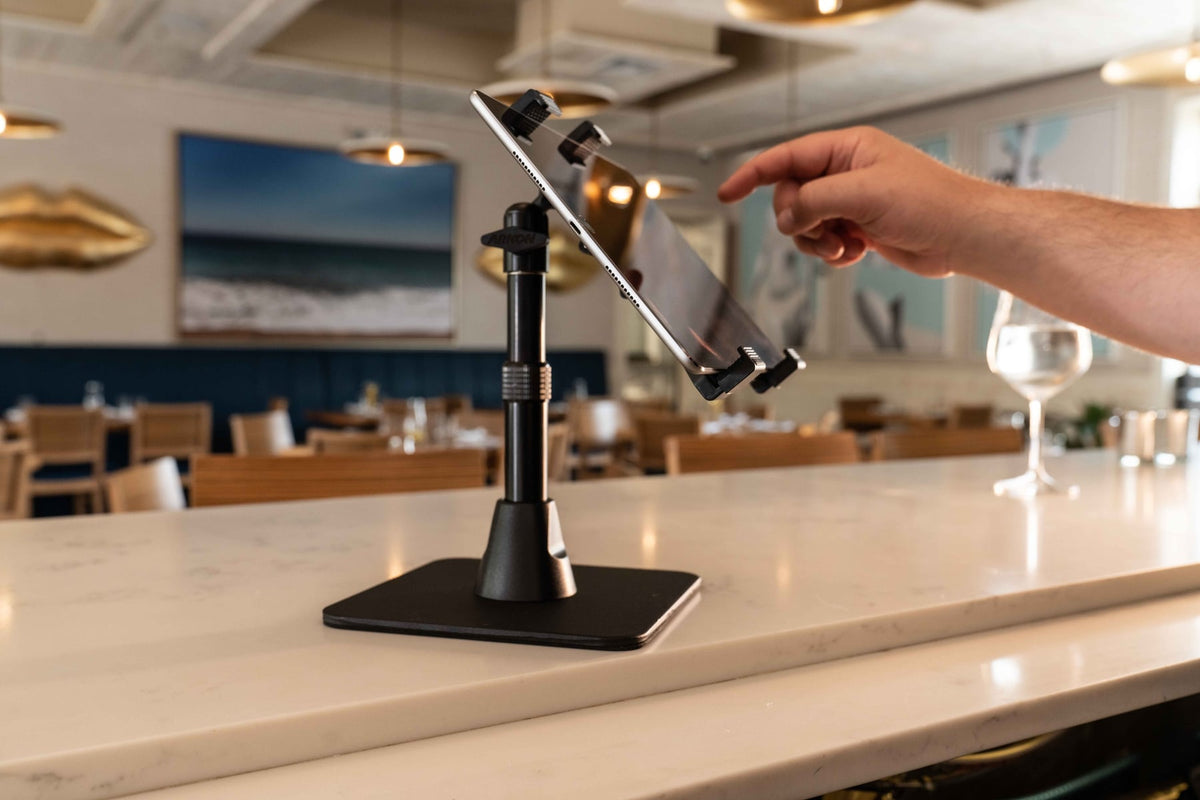
Point-of-sale tablets and order-taking devices need mounts that support quick removal for tableside use and secure locking when left at a counter overnight.
Healthcare
Mobile carts and wall-mounted tablets support charting and communication. Space is tight, so a compact arm with a small footprint often matters more than reach.
Content Creation and Streaming
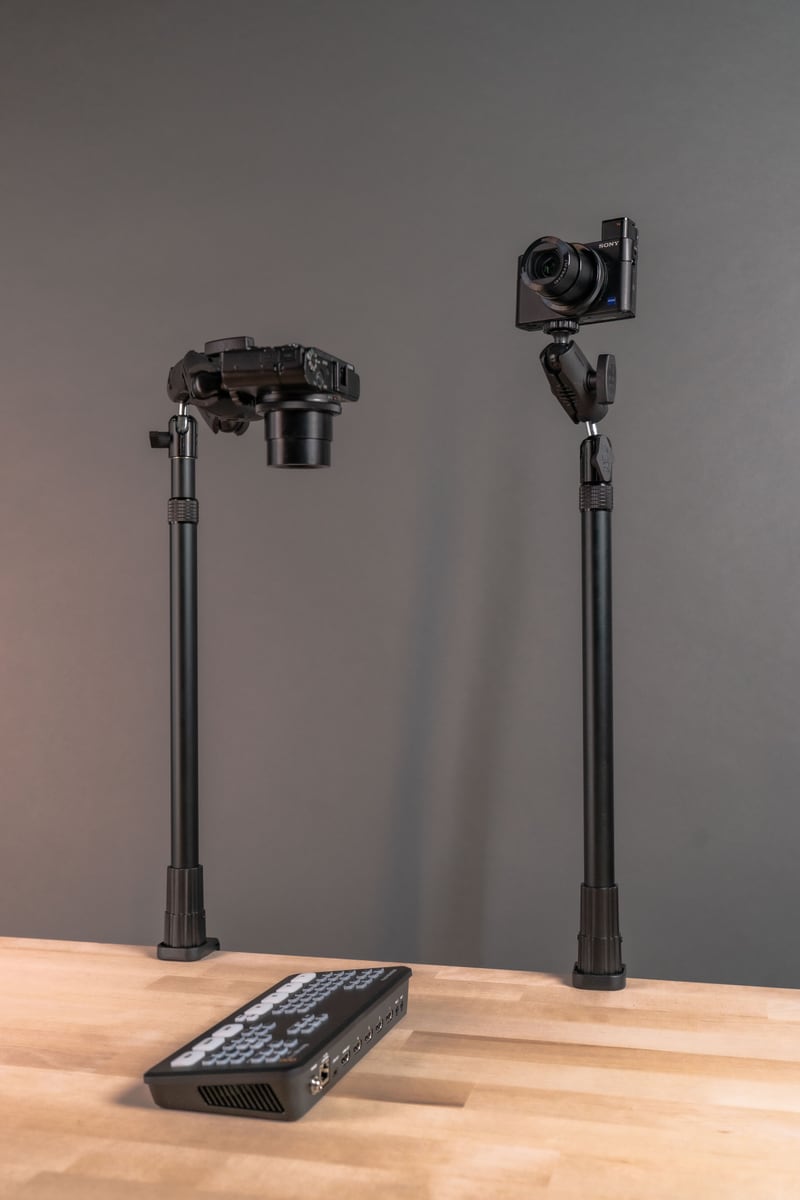
Creators need repeatable, stable camera or phone angles for recording and live streaming. A ball joint with strong friction control keeps framing consistent shoot after shoot without needing to re-adjust every time.
The Case for Modular Systems
A modular mounting ecosystem lets a business standardize on one base and arm style across many vehicles or stations, then adapt the holder as devices change. This matters most for organizations managing multiple vehicles, carts, or workstations, where replacing an entire mount every time hardware is upgraded is expensive and slow. iBOLT mounts are built around this kind of modular approach, with interchangeable bases, arms, and device holders designed to work together across vehicle, warehouse, retail, healthcare, and creator setups. The practical benefit is fewer full replacements and more targeted upgrades when only one part of the setup needs to change.
Buying Guidance by Use Case
A quick way to narrow choices:
- Frequent driver device swaps: prioritize a quick-release holder over a locking one.
- Shared or public-facing setups: prioritize a locking holder and a tamper-resistant base.
- Rough terrain or off-road use: prioritize a reinforced arm and a vibration-dampening joint over reach.
- Tight spaces like carts or exam rooms: prioritize a short, low-profile arm over a long extension.
- Content creation: prioritize a joint with strong friction hold over a wide range of adjustment.
When in doubt, check the manufacturer's specifications for exact ball size, load rating, and device dimension range before ordering rather than relying on the product photo alone.
Conclusion
The growing dependence on mobile devices across transportation, warehousing, healthcare, retail, and content creation has made Professional-Grade Mounting Solutions a practical necessity rather than an accessory. Choosing the right system means matching the mounting surface, device size, vibration environment, and removal frequency to the right combination of base, arm, and holder. A modular approach gives businesses room to adapt as devices and workflows change, without replacing a working setup from scratch.
Related iBOLT Mounting Options

iBOLT™ xProDock™ Bizmount™ Amps
A related iBOLT option that matches the mounting needs covered in this article.

iBOLT™ TabDock™ Bizmount™ Wedge
A related iBOLT option that matches the mounting needs covered in this article.

iBOLT™ xProDock™ NFC Bizmount™ - Phone Holder/Mount with Heavy Duty Suction Cup Base and 1.5m USB-C Cable
A related iBOLT option that matches the mounting needs covered in this article.

iBOLT™ LockPro™ Metal Locking Tablet Drill Base Mount
A related iBOLT option that matches the mounting needs covered in this article.
FAQ
What is a professional mounting solution?
It is a mounting system built from a base, arm, joint, and device holder designed for repeated daily use in commercial or industrial settings, as opposed to a one-piece consumer mount built for occasional use.
How do I know what ball size my mount uses?
Check the manufacturer specifications for the arm or base. Common sizes are 17mm, 20mm, 25mm (1 inch), 38mm (1.5 inch), and 57mm (2.5 inch). Mismatched sizes require an adapter to connect.
Will a mount hold a tablet in a rugged case?
Only if the holder's adjustable range accounts for the case's added width and depth. Always measure the device with its case attached, not the bare device.
Do I need a locking mount?
If the device is left unattended in a shared vehicle, retail counter, or public area, a locking holder or key-secured mount reduces theft risk. For personal or single-user setups, a standard quick-release holder is usually sufficient.
Can I upgrade my mount without replacing the whole system?
With a modular system, yes. Bases and arms typically stay in place while the device holder or adapter plate is swapped when hardware changes.
What should I check before buying a vehicle mount?
Confirm the mounting surface (dash, pillar, or console), the vibration level the vehicle produces, the device size including any case, and whether the mount needs to support a charging cable.

Leave a comment
This site is protected by hCaptcha and the hCaptcha Privacy Policy and Terms of Service apply.