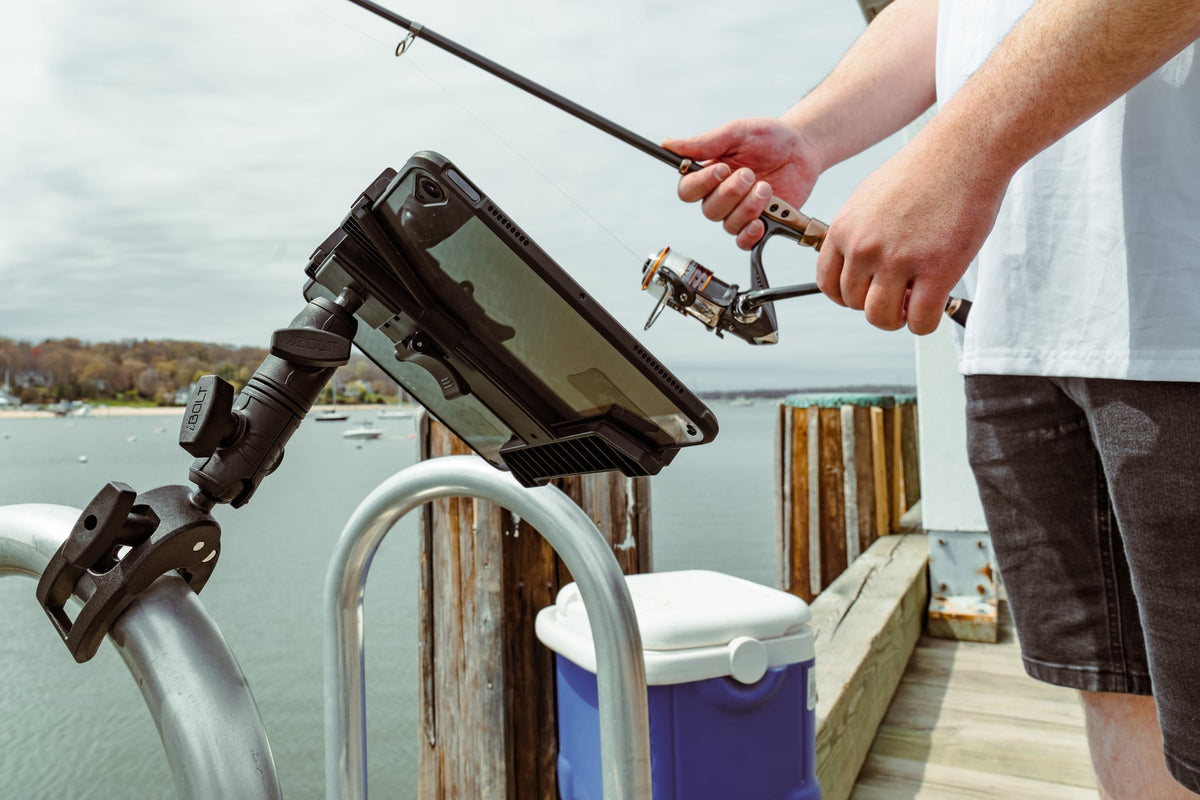
If you run a Garmin GPS on your boat, in your truck, or on a motorcycle, you have probably run into the same problem: the original mount cracked, the suction cup failed, or you want to move the unit to a new helm or dash and you are not sure which ball mount will actually fit. Garmin builds most of its GPS line around a small handful of industry-standard mounting interfaces, which is good news once you know what to look for and frustrating if you buy the wrong size first.

This guide breaks down the ball sizes and mounting patterns Garmin actually uses, what changes when you move the device to a marine environment, and what to check before you order a replacement garmin ball mount.
What a Garmin Ball Mount Actually Is
A ball mount uses a ball-and-socket joint between the mounting arm and the device cradle. The ball rotates and tilts inside the socket, which is what lets you angle a GPS unit away from glare on a bright day at the helm or reposition it after you swap seats. Once you tighten the socket, the connection locks the device at that angle until you loosen it again.
This design is common because it gives you:
- Fast angle adjustment without tools
- One mounting standard that works across many bases (suction, clamp, flush, RAM-style arms)
- A simple point of failure to replace if the arm or socket wears out, instead of replacing the whole mount
The ball diameter is the part that determines compatibility. A socket sized for one ball diameter will not securely grip a different diameter, even if it looks close.
Garmin Ball Sizes Explained
17mm Ball Mount
The 17mm ball is the most common size across Garmin's automotive and portable navigation line. Models that typically use a 17mm ball include the Garmin Drive 52, dēzl OTR500, dēzl OTR700, Overlander, Catalyst, and zūmo XT. Because 17mm is a widely adopted industry size, you generally have a broad choice of arms, suction bases, vent mounts, and clamp mounts that will accept it.
22mm Ball Mount
Larger Garmin units, especially RV and heavy truck navigators with bigger screens, step up to a 22mm ball. The Garmin RV 1090, RV 890, dēzl OTR800, and dēzl OTR1000 use this larger diameter. The added size gives more holding surface for a heavier device, which matters when the unit is exposed to constant road vibration or, in a marine setting, engine and hull vibration plus wave impact.
AMPS Pattern
Some Garmin devices skip the ball entirely and mount through the AMPS pattern, a four-hole rectangular layout spaced roughly 30mm by 38mm on the back of the cradle. You will see this on the GPSMAP 276Cx, GPSMAP 66i, GPSMAP 66sr, Montana series, Tread series, and select zūmo motorcycle units. AMPS is also the pattern most marine electronics and fixed dash mounts are built around, so an AMPS-to-ball adapter plate is often the bridge that lets these units work with standard ball mount arms.
Marine and Boat Mounting Considerations
Boat installations put more demand on a mount than a car dash does. A few things change once you are working on a console, gunwale, or bimini frame instead of a windshield:
- Vibration and pounding. Hull slap and engine vibration are more aggressive than road vibration. A loose or undersized ball connection will work its way out of position on the water faster than it would in a vehicle.
- Mounting surface. Fiberglass, aluminum rails, and dash panels each call for different hardware. A flush mount or RAM-style base with marine-grade fasteners is usually a better long-term choice than a suction cup, which does not hold reliably on textured or curved fiberglass.
- Corrosion exposure. Saltwater environments shorten the life of standard hardware. Look for stainless fasteners and mounts rated for marine use rather than automotive-only components.
- Cable routing and charging. If your Garmin unit needs a permanent power or NMEA connection, plan the mount location around where that cable can be routed cleanly, not just where the sightline is best.
- Removal frequency. If you pull the GPS off the boat between trips, a quick-release ball socket saves time over a mount that requires tools every time.
None of this changes the ball size math. A 17mm ball is still a 17mm ball on a boat. What changes is the base you attach it to and the hardware grade you choose.
What to Verify Before You Buy a Replacement Mount
Before ordering, check these five things:
- Ball diameter. Measure the existing ball with a caliper if you have one, or check Garmin's documentation for your exact model number. 17mm and 22mm look similar at a glance but are not interchangeable.
- Mounting interface on the cradle. Confirm whether your device cradle has a ball post, a socket, or an AMPS four-hole pattern on the back.
- Base compatibility with your mounting surface. Suction, adhesive, clamp, and drilled/flush bases all attach differently. Match the base to fiberglass, dash, rail, or console before worrying about the arm.
- Hardware material. On a boat, confirm stainless or marine-rated fasteners rather than standard automotive hardware.
- Adapter needs. If your device uses AMPS but you want to use a ball mount arm, confirm you are buying the correct AMPS-to-ball adapter plate rather than assuming universal fit.
Skipping any of these is the most common reason people end up with a mount that technically "fits" but wobbles, loosens, or does not hold the device level.
Why Standardized Mounting Interfaces Matter
The reason Garmin devices are relatively easy to remount is that the company builds around established mounting standards instead of proprietary ones. That gives you:
- A wider selection of replacement arms, bases, and adapters
- The ability to move a device between a car, truck, and boat by swapping bases rather than buying a whole new mounting system
- Easier repairs when a single component, like a socket or clamp, wears out
- More flexibility to upgrade a mount for a rougher environment without replacing the GPS cradle itself
Knowing your ball size or AMPS pattern up front means you are shopping with the right specification instead of guessing.
Related iBOLT Mounting Options

iBOLT Garmin Striker 4 / Fish Finder IncrediBOLT™ 360 Clamp / Handlebar / Rail Mount
Useful for keeping electronics positioned on boats and around marine work areas.

iBOLT Garmin Striker 4 / Fish Finder Dual Arm Handlebar, Rail Mount
Useful for keeping electronics positioned on boats and around marine work areas.

iBOLT Garmin Striker 4 / Fish Finder Handlebar, Rail Mount
Useful for keeping electronics positioned on boats and around marine work areas.

iBOLT Universal Marine Fish Finder Dual Arm Handlebar/ Rail Mount
Useful for keeping electronics positioned on boats and around marine work areas.
FAQ
What size ball mount does Garmin use?
Most Garmin GPS devices use a 17mm ball. Larger RV and heavy-duty truck models use a 22mm ball, and some handheld and motorcycle units use the AMPS four-hole pattern instead of a ball.
How do I check which ball size my Garmin uses?
Measure the ball on your existing mount with a caliper, or check the mounting specifications in Garmin's product documentation for your exact model.
Can I use a standard ball mount on a boat?
Yes, as long as the ball diameter matches your device and the base and hardware are rated for marine use. A suction mount that works on a dash will not hold reliably on a boat console or fiberglass surface.
What is the AMPS mounting pattern?
AMPS is a four-hole rectangular mounting pattern spaced roughly 30mm by 38mm, commonly used on GPSMAP, Montana, and Tread series devices, as well as many marine electronics.
Which Garmin models use a 22mm ball?
The Garmin RV 1090, RV 890, dēzl OTR800, and dēzl OTR1000 use the larger 22mm ball for added stability with bigger screens.
Does the wrong ball size actually cause problems?
Yes. A mismatched ball and socket will not lock properly, leading to a loose connection, added vibration, and faster wear on both the mount and the device cradle.

Leave a comment
This site is protected by hCaptcha and the hCaptcha Privacy Policy and Terms of Service apply.