You have a good holder, a solid base, and an arm that looks like it should connect them. Then the ball slides into the socket and will not tighten, or it will not fit at all. A difference of a few millimeters is enough to stop a ball mount system from working correctly.
Ball size is one of the first specifications to confirm when mixing mounting parts. The diameter must match the socket, and related standards such as AMPS and VESA describe different parts of the connection. This guide separates those terms so you can identify what you have and what you need.
Common Ball Mount Sizes and Where They Fit
Ball mount sizes are normally stated by diameter. Measure the widest part of the ball with a caliper when the original specification is unavailable. Do not estimate from a photo because 20mm, 22mm, and 25mm parts can look similar on a screen.
| Ball size | Common description | Typical iBOLT use |
|---|---|---|
| 17mm | Compact ball joint | Phones, Garmin-compatible components, and small accessories |
| 20mm | Medium compact joint | Phone and small-device mounting components |
| 22mm | Intermediate joint | Select holders and adapters that specifically list 22mm |
| 25mm | 1 inch, B size | Vehicle, fleet, tablet, marine, and general commercial systems |
| 38mm | 1.5 inch, C size | Forklift, warehouse, and heavier industrial installations |
| 57mm | 2.25 inch | Large display and high-load industrial mounting components |
These are categories, not permission to substitute one size for another. A 25mm ball belongs in a 25mm socket. If the parts use different diameters, they need an adapter specifically designed for those two connections.
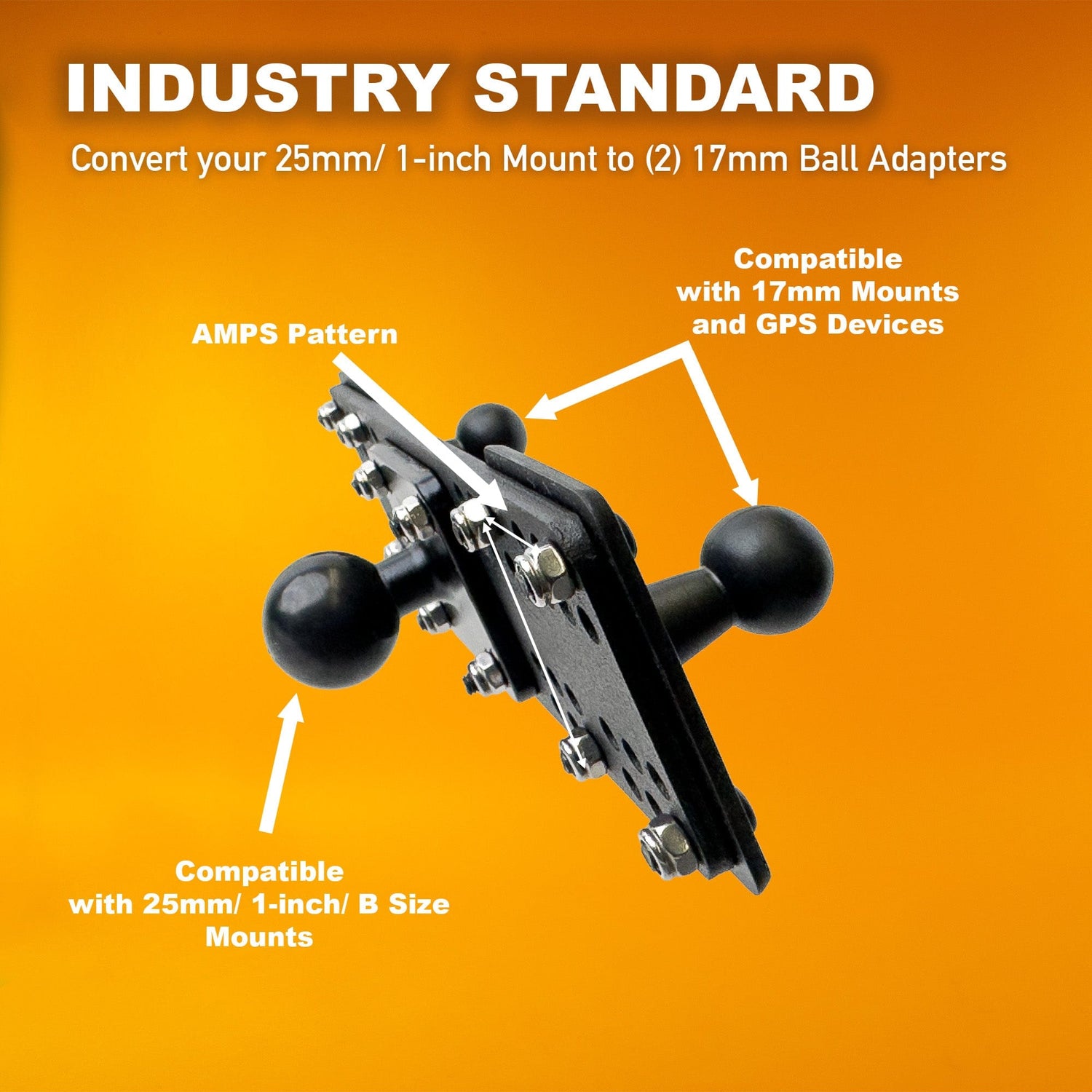
The iBOLT Industry Standard 17mm AMPS Plate combines a compact 17mm ball with an AMPS plate. That description tells you both the joint size and the fastening pattern on the other side.

iBOLT Industry Standard 17mm AMPS Plate - $9.95
Ball Size, AMPS, and VESA Are Different Specifications
Three terms often appear together in mount descriptions, but they answer different questions.
A ball size tells you which socket fits the adjustable joint. AMPS describes a compact hole pattern used to fasten mounting components. VESA describes standardized hole patterns commonly found on the backs of monitors and displays, including VESA 75 and VESA 100.
A product can therefore be a 25mm ball-to-AMPS adapter or an AMPS-to-VESA plate. Reading only one part of the description can lead to the wrong part. Trace the entire connection from the mounting surface to the device:
base connection -> arm sockets -> adapter pattern -> holder connection
The iBOLT 25mm Metal AMPS Adapter Plate provides a 25mm ball on one side and a four-hole AMPS interface on the other. It is useful when a B-size arm must connect to an AMPS holder, base, or accessory.

iBOLT 25mm / 1 inch Metal AMPS Adapter Plate - $12.95
What Cross-Compatibility Actually Means
Cross-compatibility means components can connect when they share the same defined interface. Industry-standard 25mm B-size components, for example, can often be combined across product lines when the ball diameter, socket design, load requirements, and clearances all match.
It does not mean every component from every system fits directly. Check these five points:
- The ball and socket diameters are identical.
- The arm and joints are appropriate for the device load.
- Any AMPS or VESA holes use the same pattern and orientation.
- The connection does not block the device, cable, release, or lock.
- The installed base and surface can support the completed assembly.
When ball sizes differ, use a named adapter rather than tightening an oversized socket around a smaller ball. The iBOLT 22mm to 25mm Composite Ball Adapter is made for that specific transition. It should not be treated as an adapter for 20mm, 38mm, or any other size not listed.

iBOLT 22mm to 25mm Composite Ball Adapter - $13.95
Larger sizes deserve the same care. A 38mm C-size arm is intended for 38mm joints, not 25mm balls. The iBOLT 5-inch Metal Double Socket Arm makes its 38mm requirement explicit.

iBOLT 5 inch Metal Double Socket Arm for 38mm Ball Joints - $24.95
A Reliable Compatibility Check
Before ordering, write down the specifications at both ends of every connection. Start with the existing base and end at the holder. If a component has no listed size or pattern, locate its model number or measure it rather than assuming.
For ball joints, confirm diameter and material. For plates, measure the hole spacing and confirm whether it is AMPS, VESA, or a product-specific pattern. For the device, record width, height, depth, case dimensions, weight, charging location, and any controls that must remain accessible.
Then consider the environment. A combination that holds a phone on a desk may not be suitable for a tablet on a forklift. Arm length, device weight, vibration, and the strength of the attachment surface all affect the complete system.
The iBOLT mounting system guide explains how bases, arms, adapters, and holders relate. Fleet teams can continue with why cross-compatible fleet mounts matter. The Mount Configurator can help narrow the components after you know the surface and device.
Frequently Asked Questions
Will a 20mm ball fit a 1-inch socket?
No. A 1-inch, or 25mm, socket is larger than a 20mm ball and will not provide the intended fit. Use components with matching diameters or a listed adapter.
Is a 25mm ball the same as B size?
In common mounting terminology, 25mm or approximately 1 inch is called B size. Always verify the actual product specification because naming alone is not enough for a commercial installation.
Is AMPS a ball mount size?
No. AMPS is a hole pattern for fastening parts. An AMPS component may include a 17mm, 20mm, 25mm, or another connection on its opposite side.
Can iBOLT parts connect to other industry-standard mounts?
They often can when both parts use the same listed ball diameter or hole pattern and are suitable for the load. Check every interface instead of assuming compatibility from appearance.
What should I do if I do not know my ball size?
Find the product model and specification first. If that is unavailable, measure the ball diameter across its widest point with a caliper and compare the result with the listed component dimensions.
Explore the iBOLT Mount Configurator once you have the measurements, or browse the full modular system to find the exact adapter your setup requires.

Leave a comment
This site is protected by hCaptcha and the hCaptcha Privacy Policy and Terms of Service apply.